
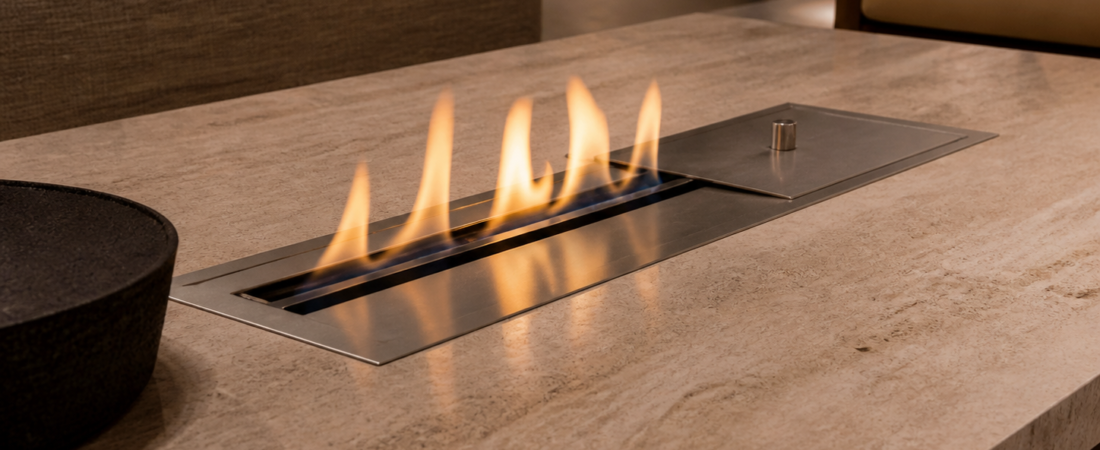
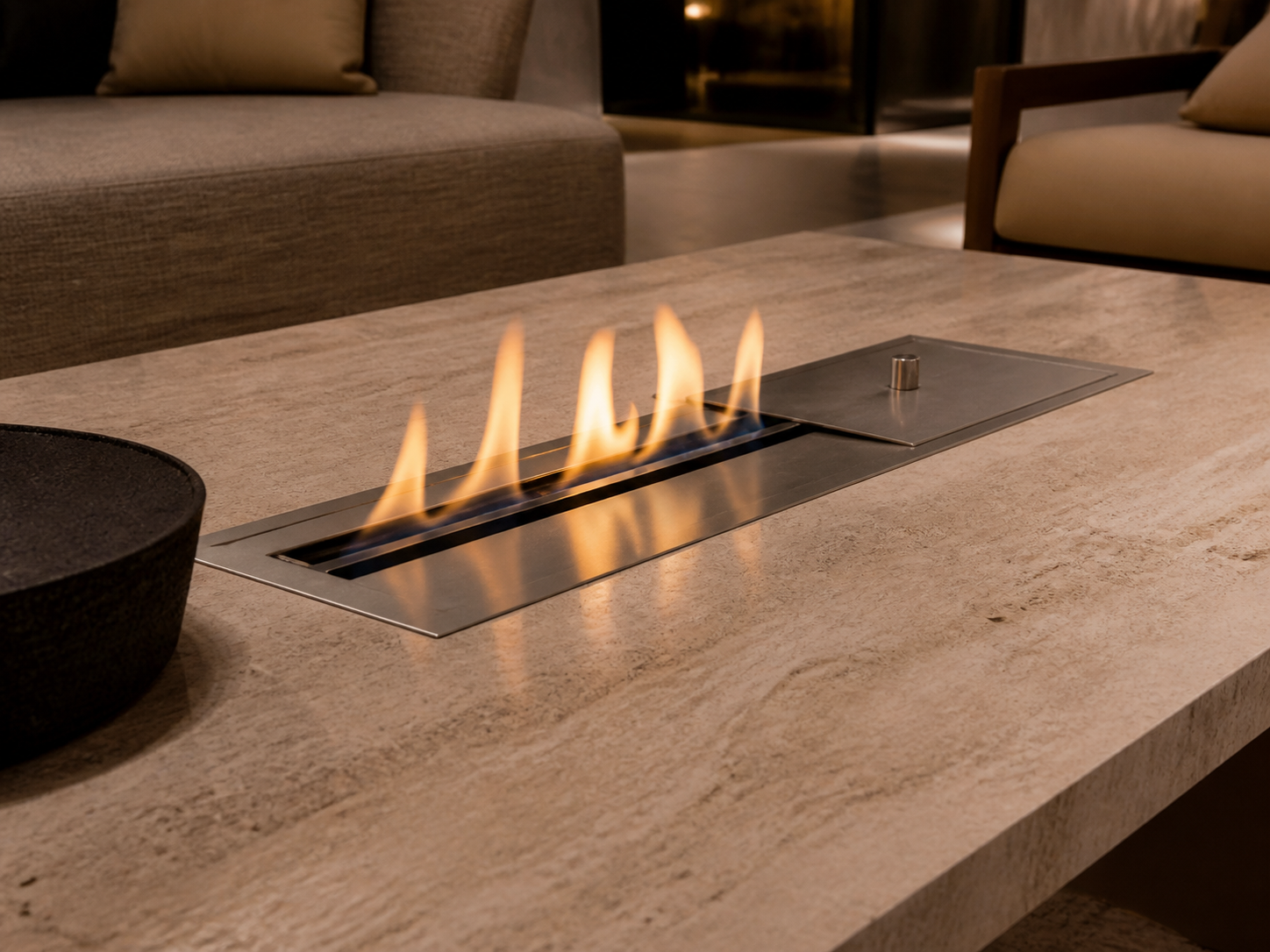
Manual does not mean primitive. In a well-planned bioethanol fireplace, a simple sliding lid can make the relationship between the user and the flame easy to understand: the lid exposes the burner, the supplied tool moves it, and closing it is part of the documented shutdown process. Today’s guide looks at the live SXRX Sliding-Lid Manual Bioethanol Burner and the questions to answer before choosing one.
Why buyers choose a manual burner
A manual insert can suit interiors where the owner wants straightforward physical control without an app or remote. The current SXRX product listing describes a precision sliding-lid mechanism and includes a stainless-steel hook tool for flame adjustment and extinguishing. The burner is listed as a drop-in insert made from 304 stainless steel.
That simplicity still calls for disciplined use. The model-specific manual—not general internet advice—should govern filling, ignition, adjustment, shutdown, cooling and maintenance.
The verified SXRX variants available today
The live Shopify catalog checked on 27 August 2026 shows seven sizes, each 180 mm wide and 105 mm deep: 300, 400, 500, 600, 700, 800 and 900 mm long. Their current SKUs run from SXFG-300 through SXFG-900. Every listed variant showed inventory at the time of review, with total product inventory of 699. Recheck the product page before ordering because stock can change.
Four questions for the design stage
Can the lid and tool be reached comfortably?
The opening should allow the supplied hook tool to operate as the instructions require. Do not place the burner where a user would need to lean across the flame or improvise with a different tool.
Has the enclosure been designed for this exact unit?
The listing calls the product a drop-in burner, but nominal dimensions alone are not installation instructions. Confirm the cut-out, clearances, non-combustible materials and service access in the supplied documentation and with the responsible local professional.
Does the room suit the manufacturer’s guidance?
“Ventless” and “chimney-free” do not mean that room conditions can be ignored. Follow the manufacturer’s ventilation guidance and applicable local requirements. Keep combustible objects, children and pets away from the operating zone.
Is manual control compatible with the household routine?
The person using the fireplace should be comfortable following a consistent start-and-stop procedure. If remote operation or digital adjustment is a firm requirement, review a verified smart model rather than expecting those functions from this manual burner.
A cautious before-lighting checklist
- Check the burner, lid, tool and surrounding area for visible problems.
- Confirm the correct fuel and the exact filling instructions for the model.
- Do not fill an operating or hot burner; observe the stated cooling time.
- Place the supplied operating tool where it can be reached immediately.
- Remove combustible objects from the area and confirm suitable room conditions.
- Read the shutdown procedure before ignition.
After the flame is extinguished
Close the lid only as directed, verify that the flame is fully out and allow the burner to cool according to the manual. Do not touch, clean or refill the unit prematurely. If operation appears abnormal, stop using it and contact the supplier or a qualified professional.
Manual SXRX or smart SXKT?
The distinction is primarily about the control experience. This SXRX uses a physical sliding lid; the live SXKT listing describes app and remote operation, an LCD interface and electronic flame adjustment. For a broader look at smart sizing, see our SXKT linear fireplace planning guide. For different manual geometries, see square versus round burner design.
Make the operating routine part of the specification
Before fabrication, match the desired flame length to a live variant, study the manual and confirm the enclosure requirements. View the current SXRX sliding-lid sizes, or ask SXFireplace to clarify the exact configuration for your project.