

Bioethanol fireplaces and ethanol burner inserts
A bioethanol fireplace gives you a real flame without a chimney, gas line or flue. Every model is made in our Yangzhou factory and can be ordered from one unit.
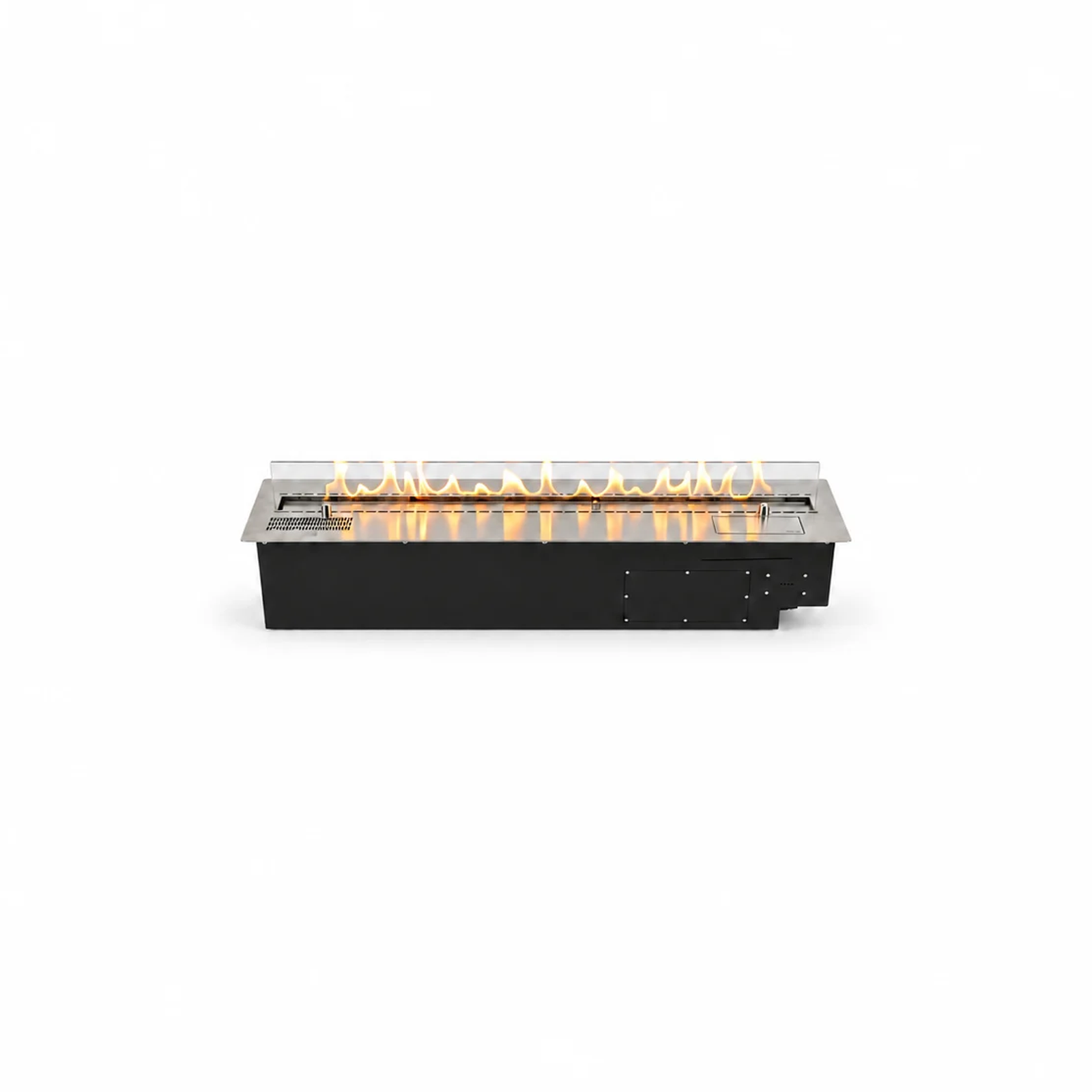
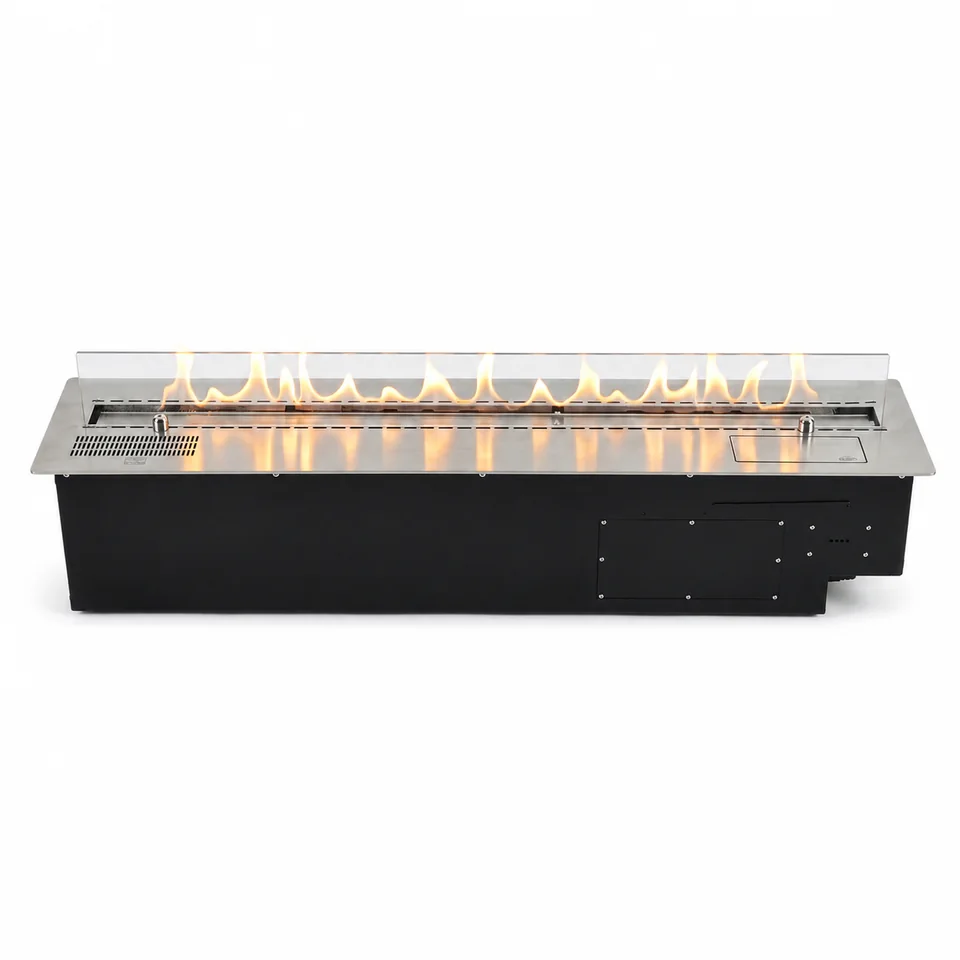
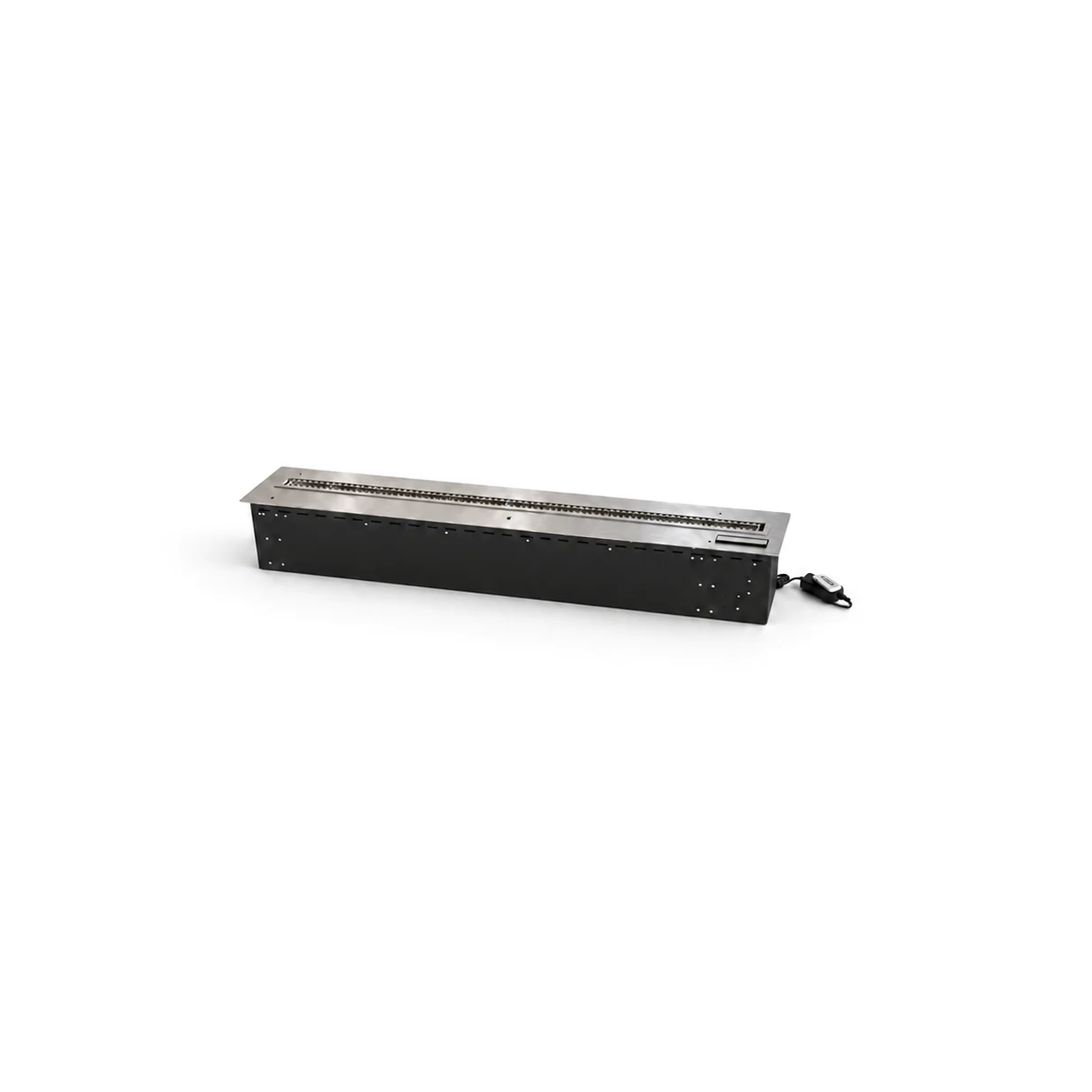
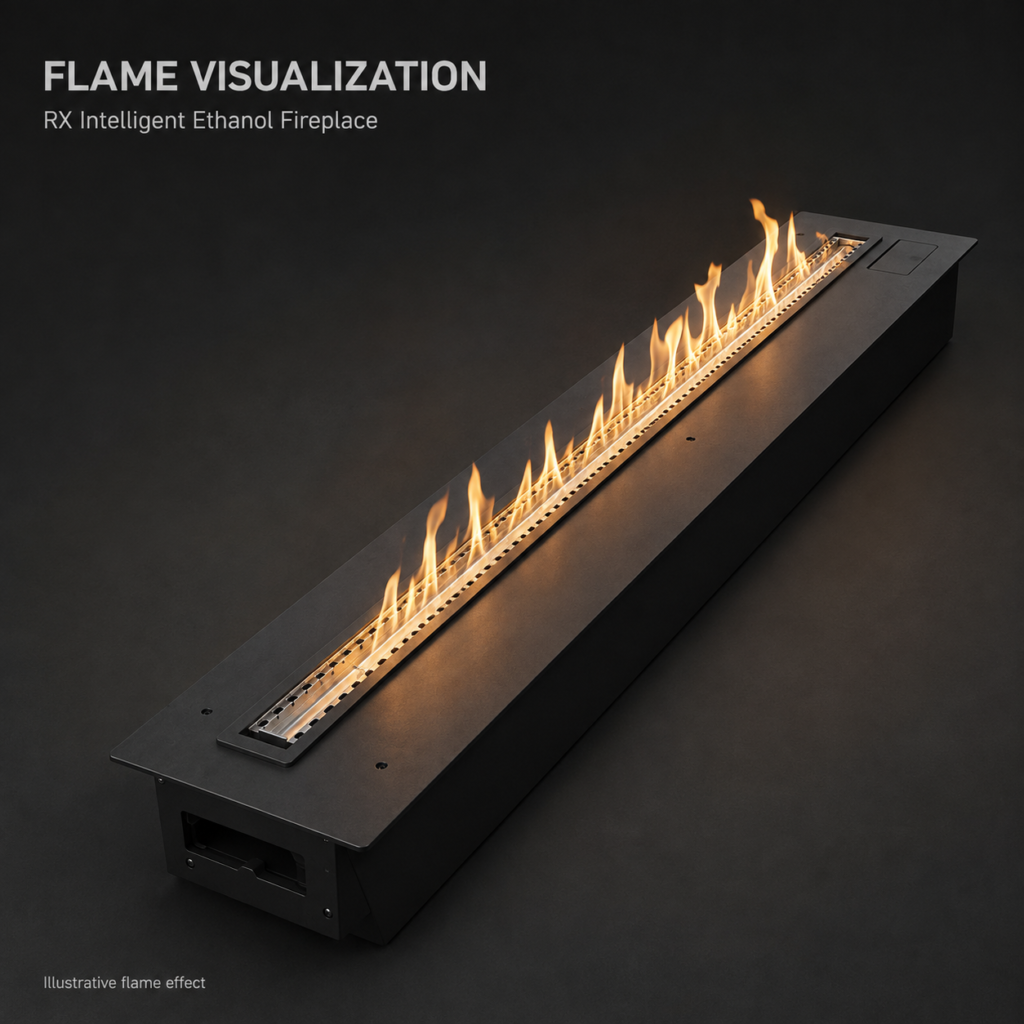
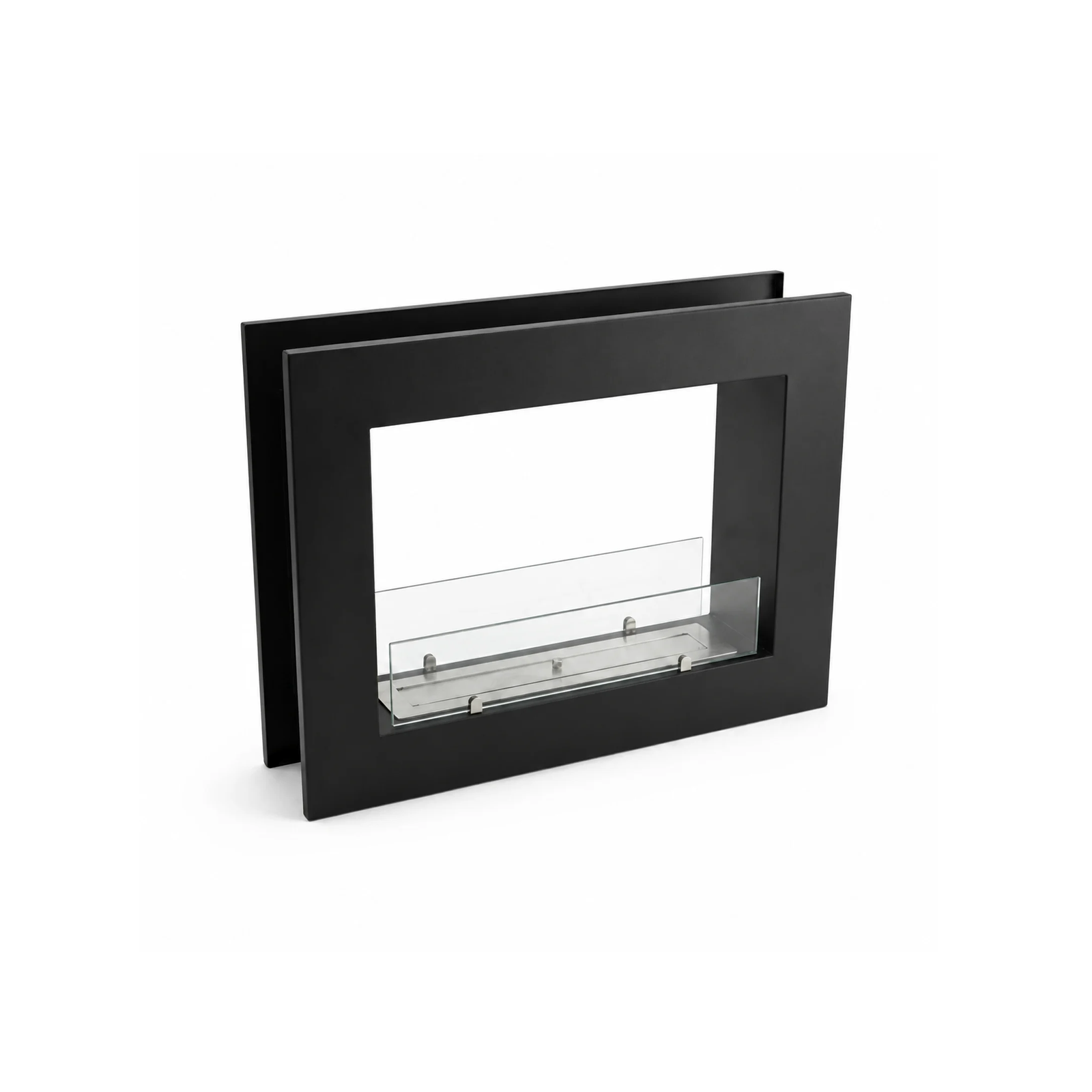
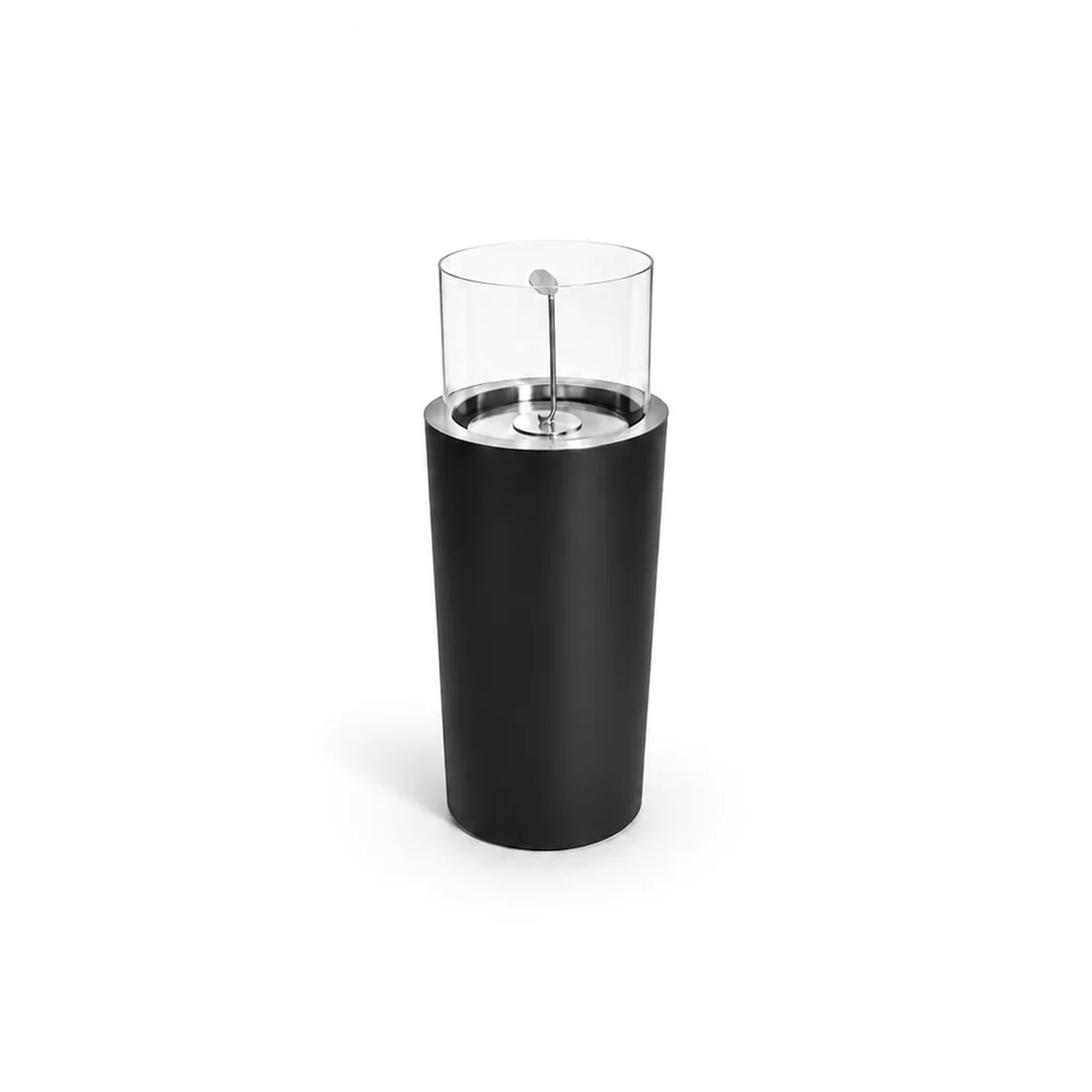
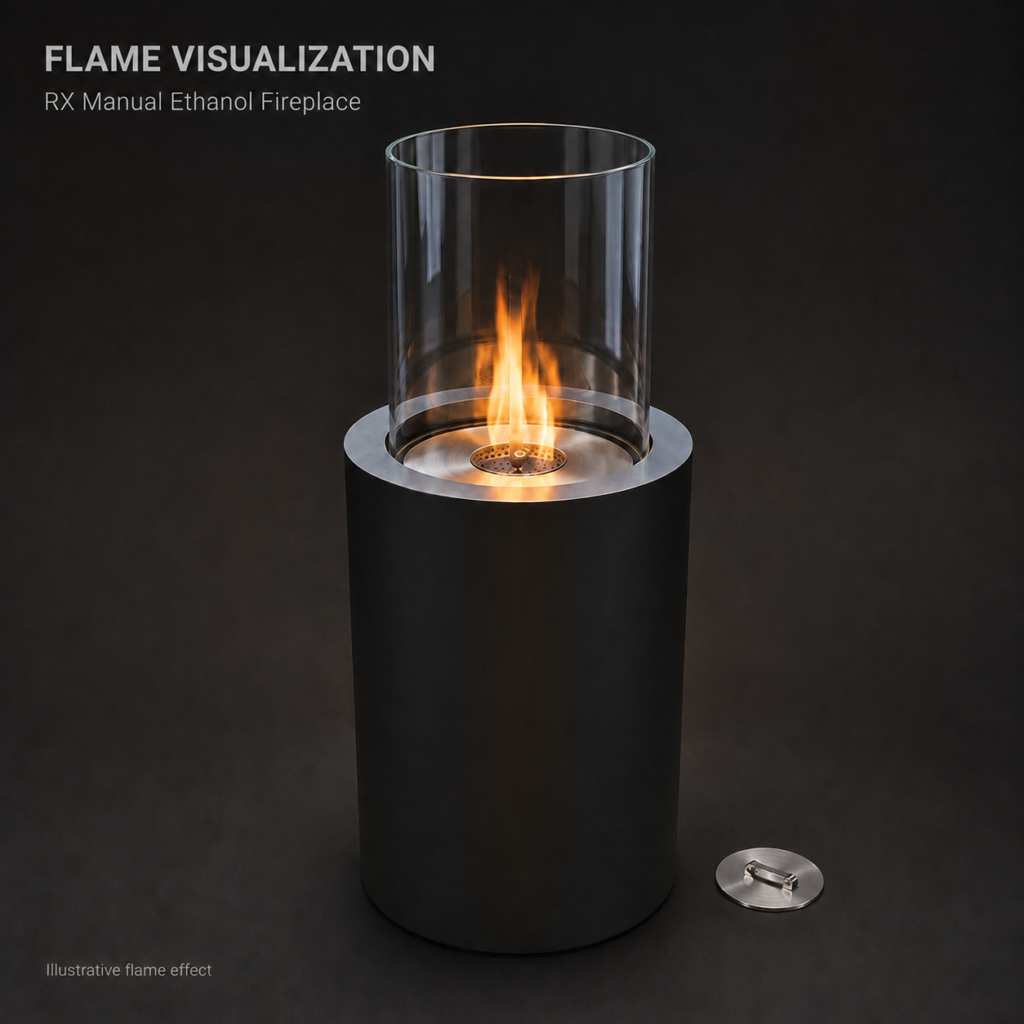
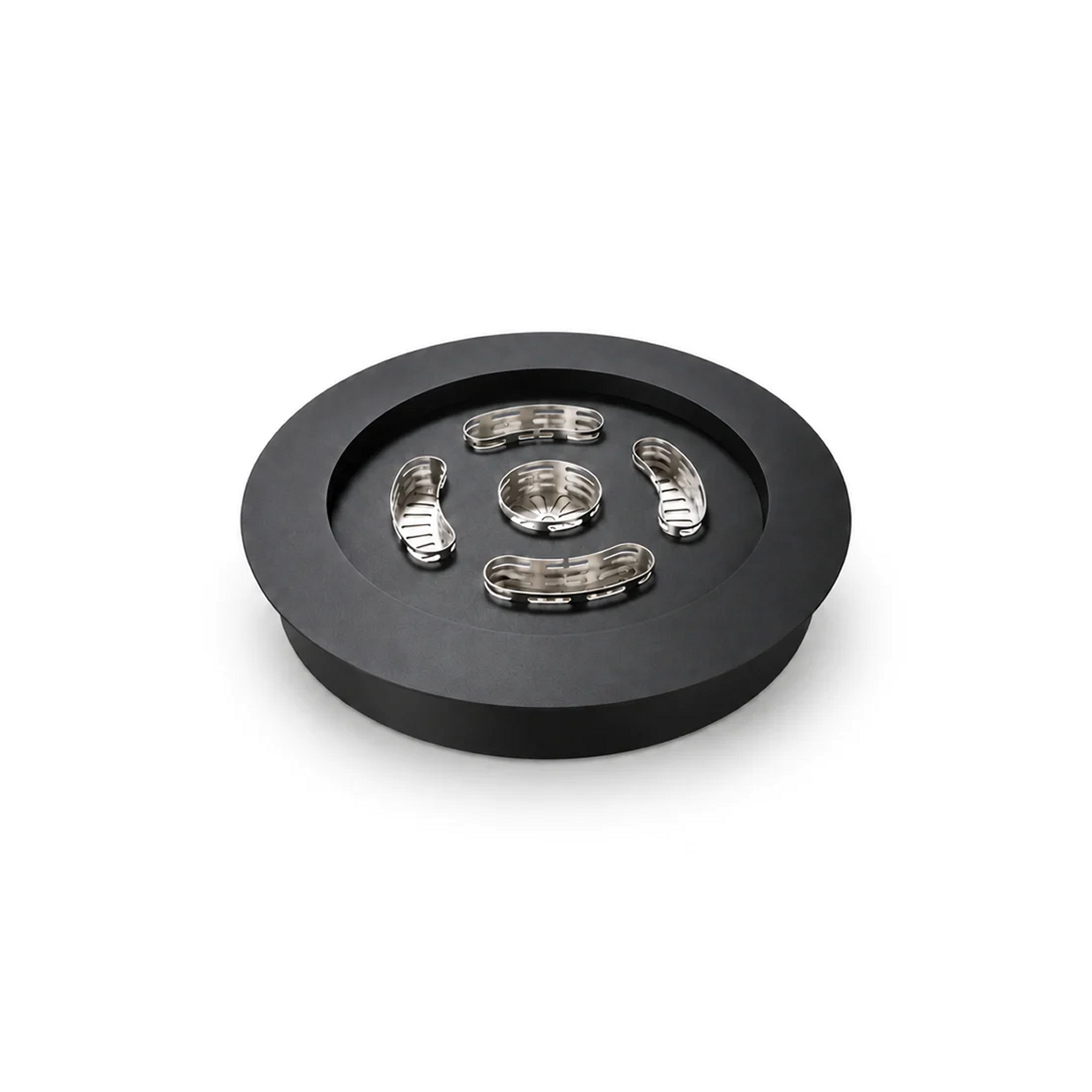
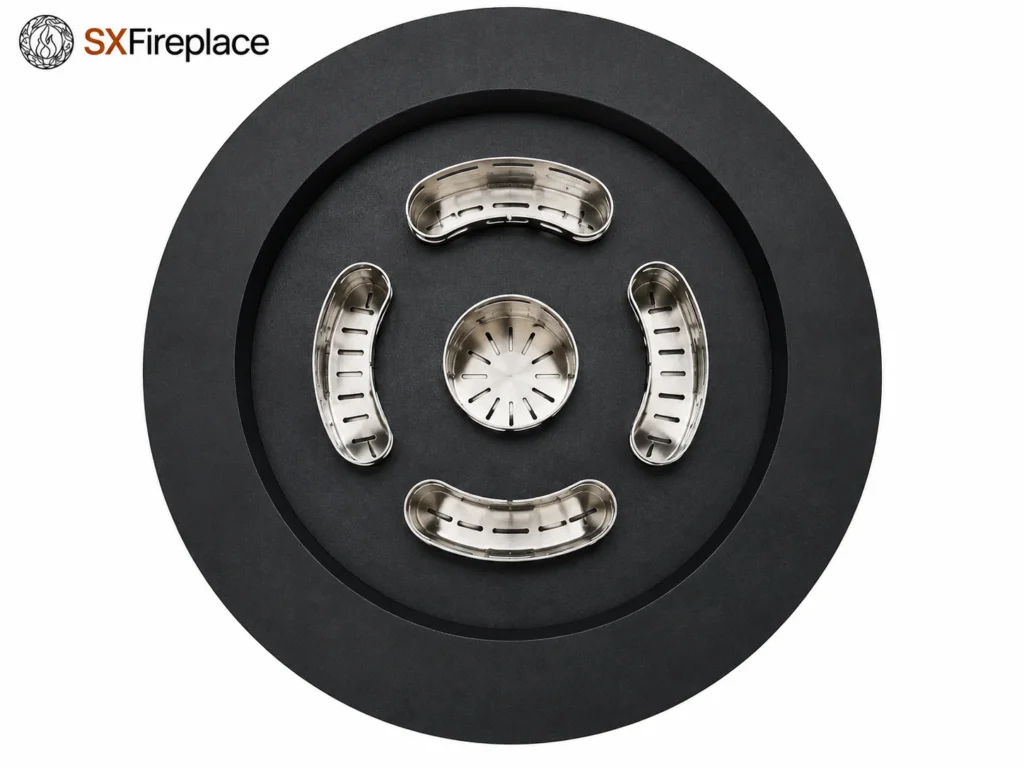
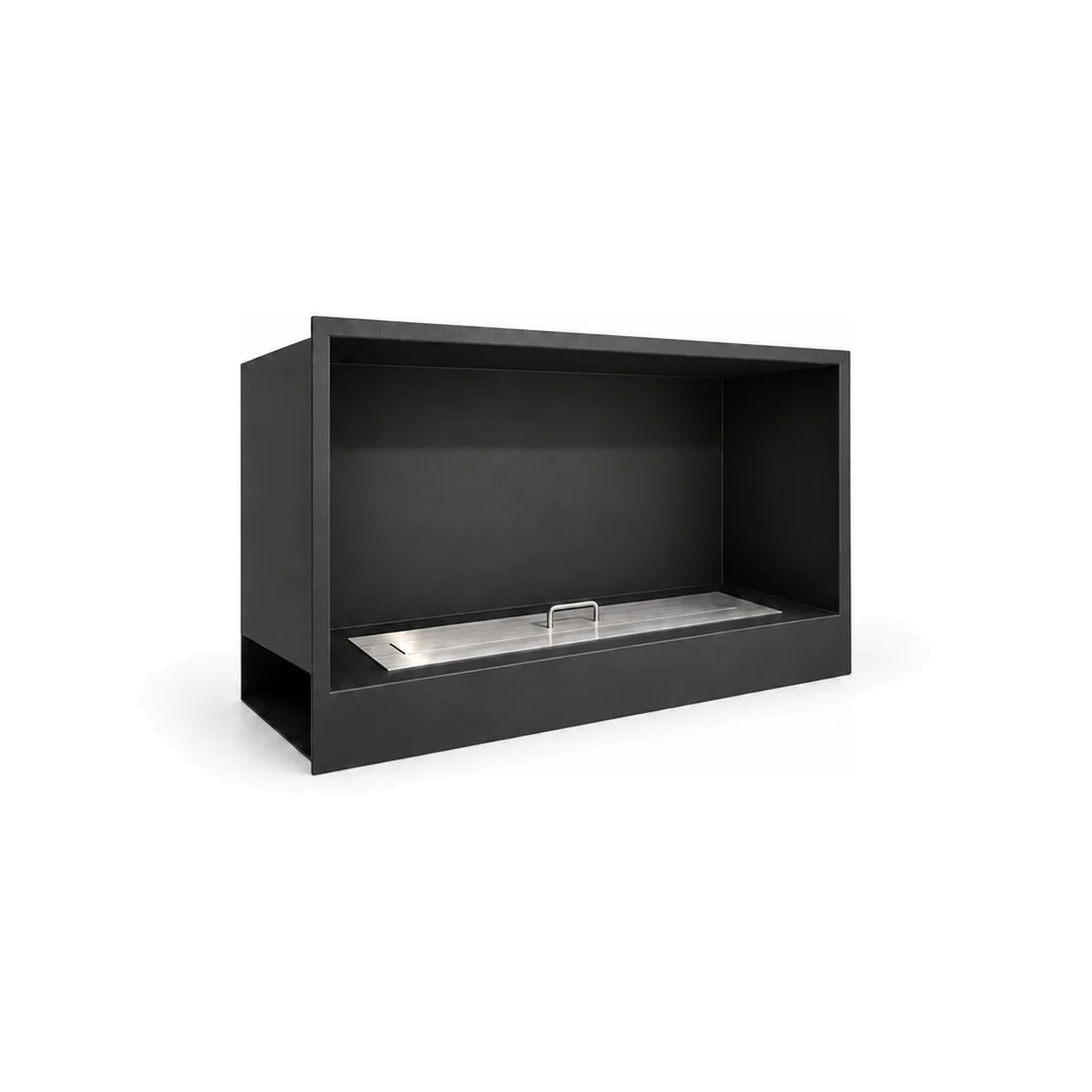
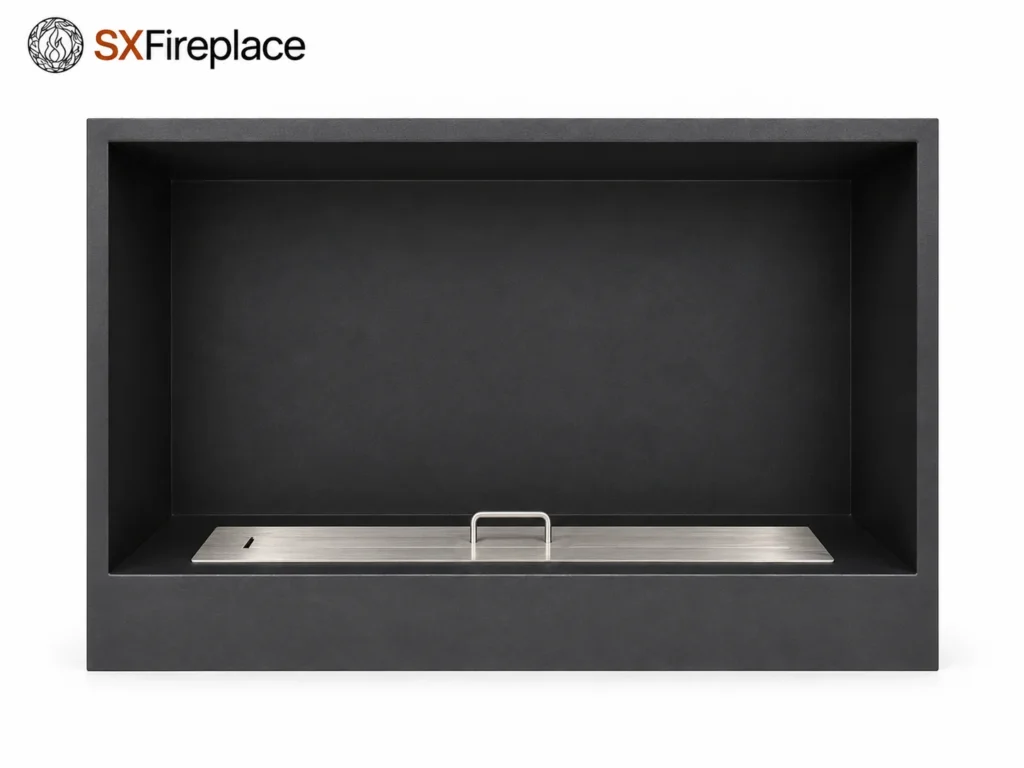
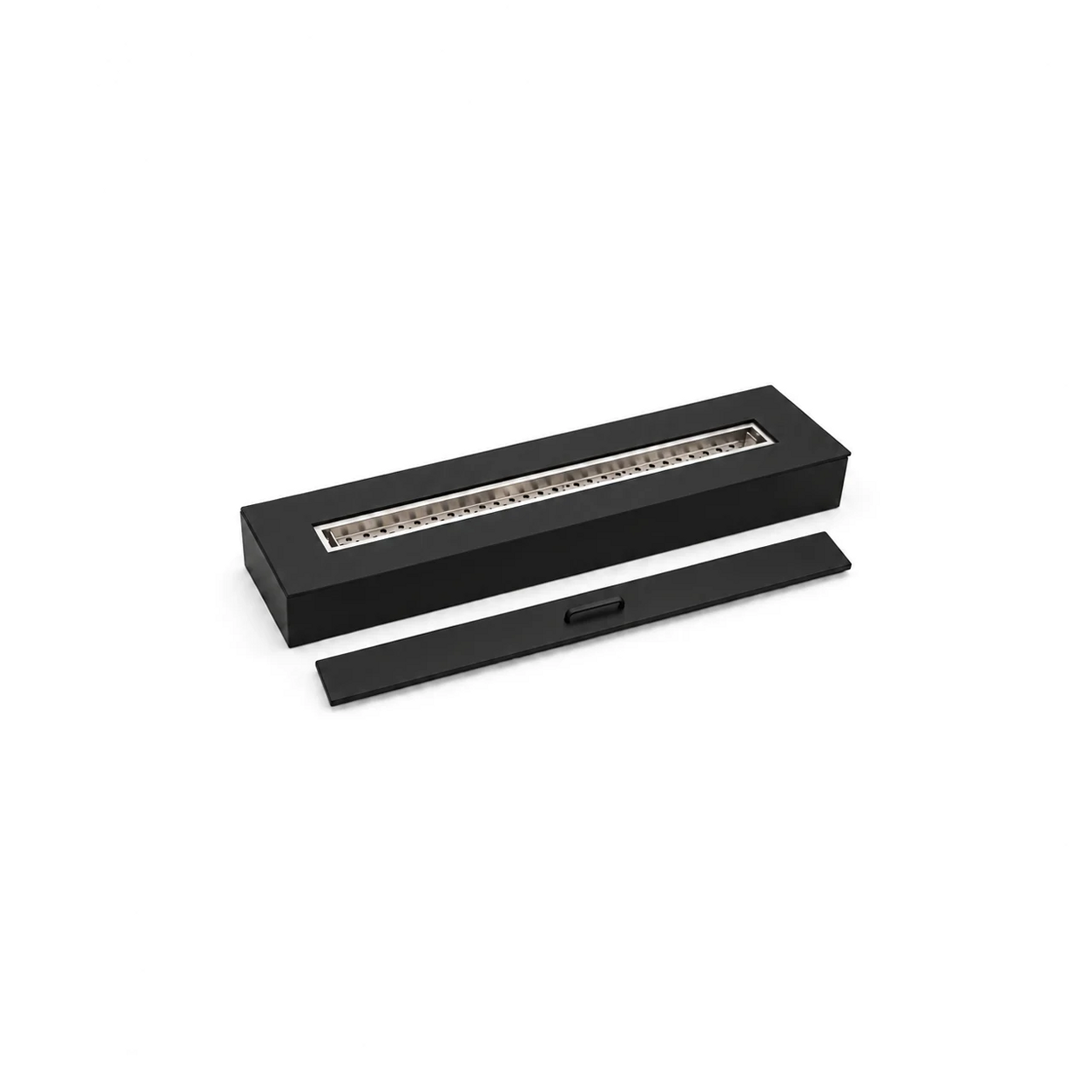
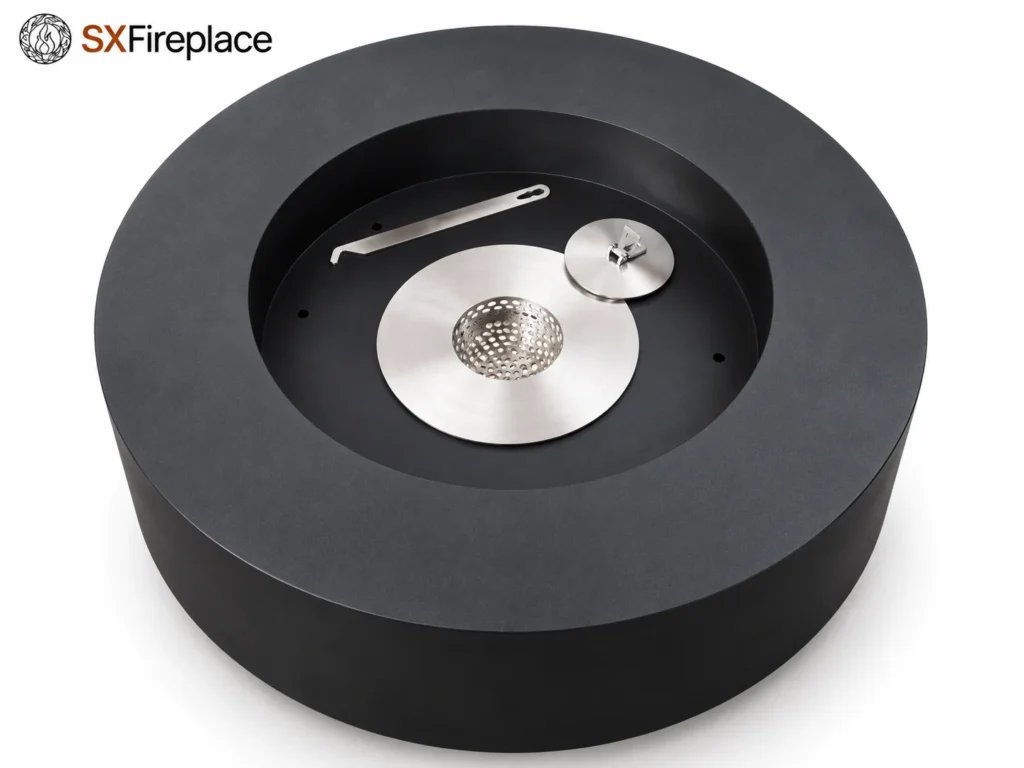
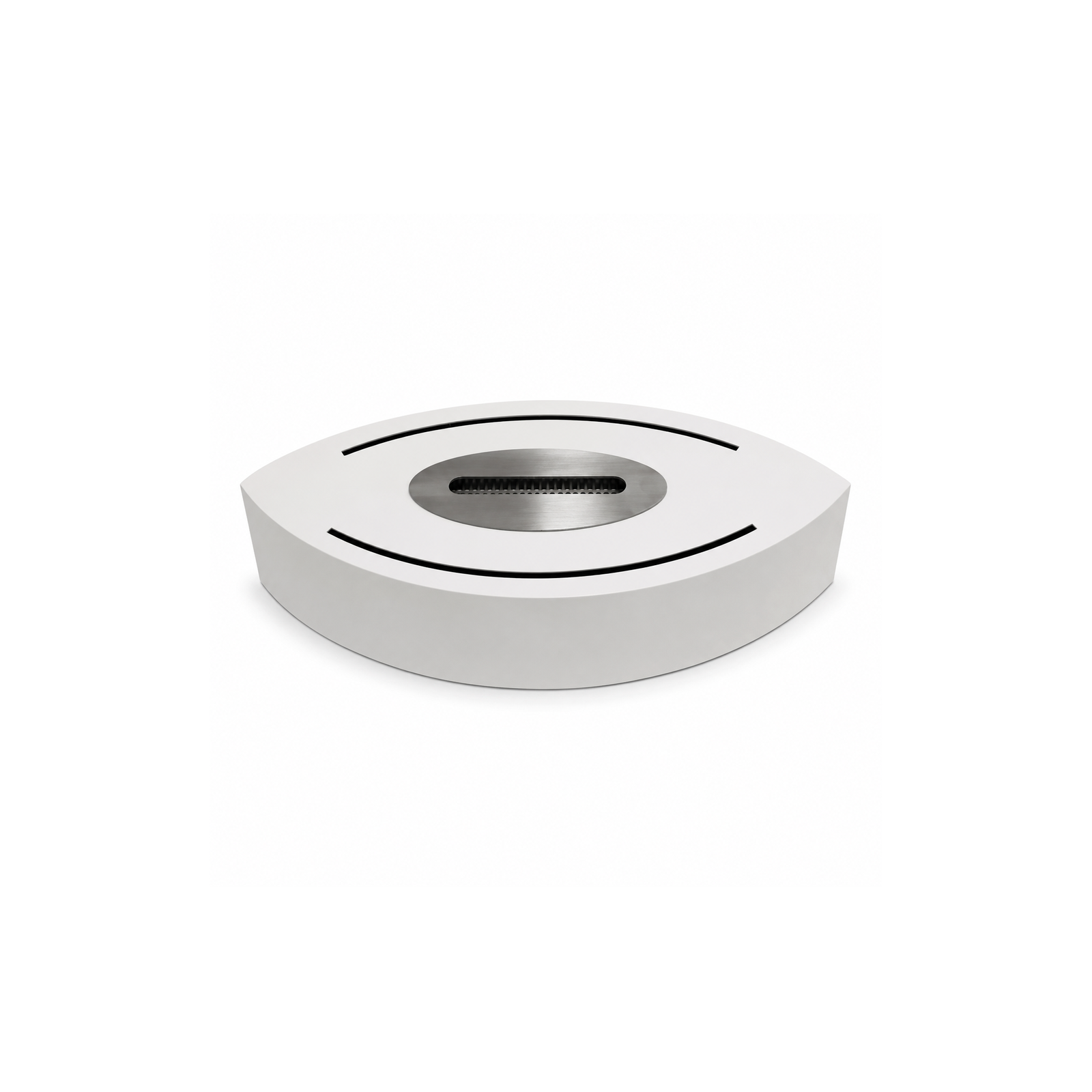
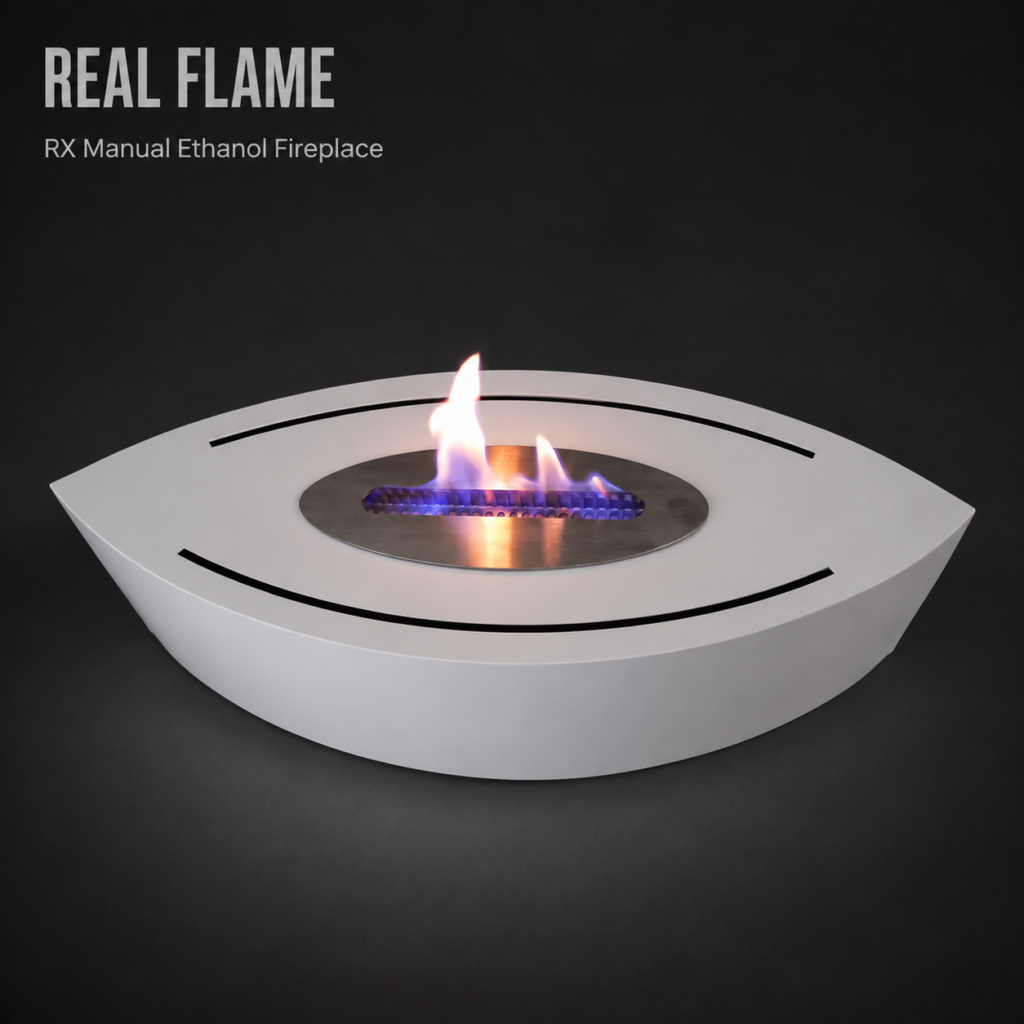
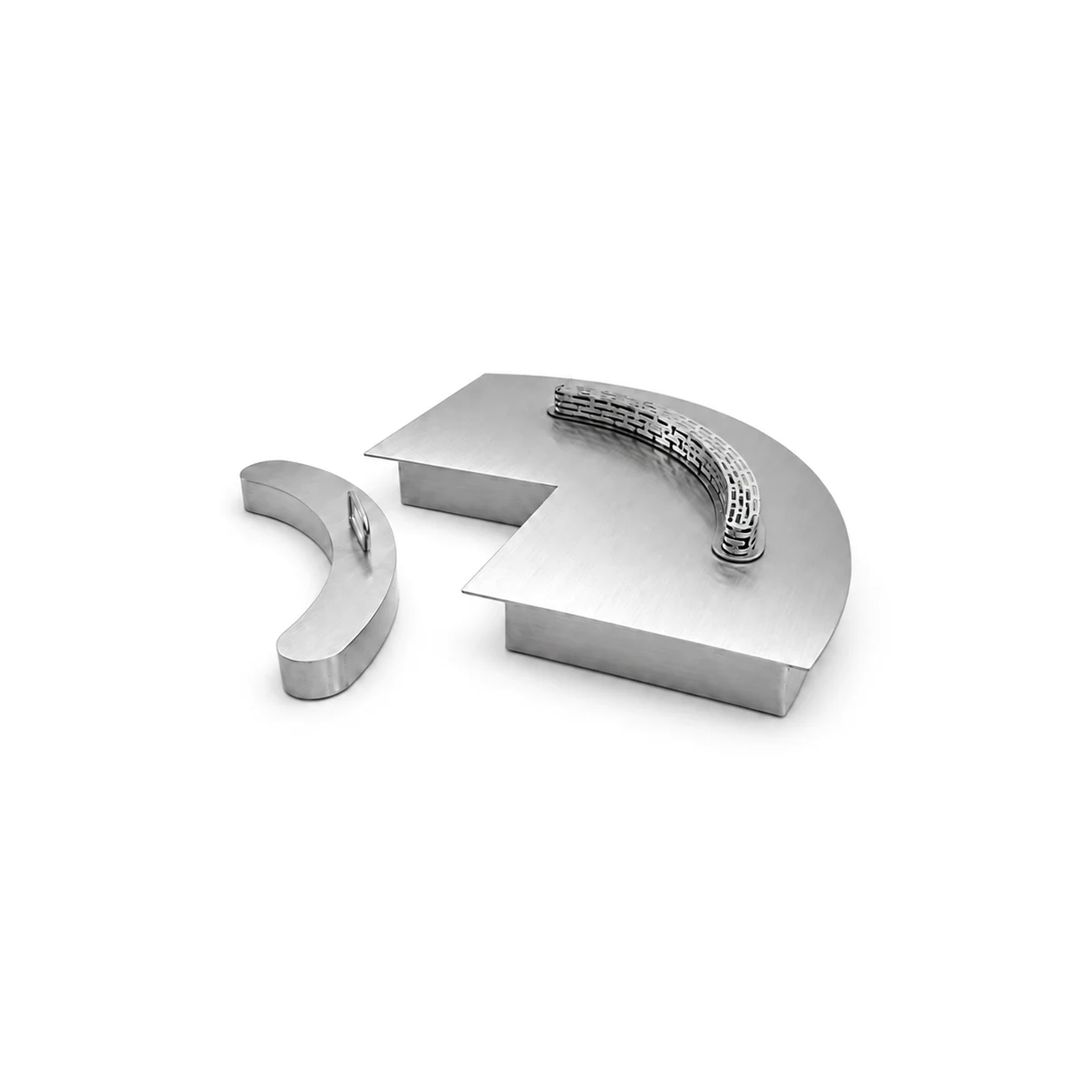
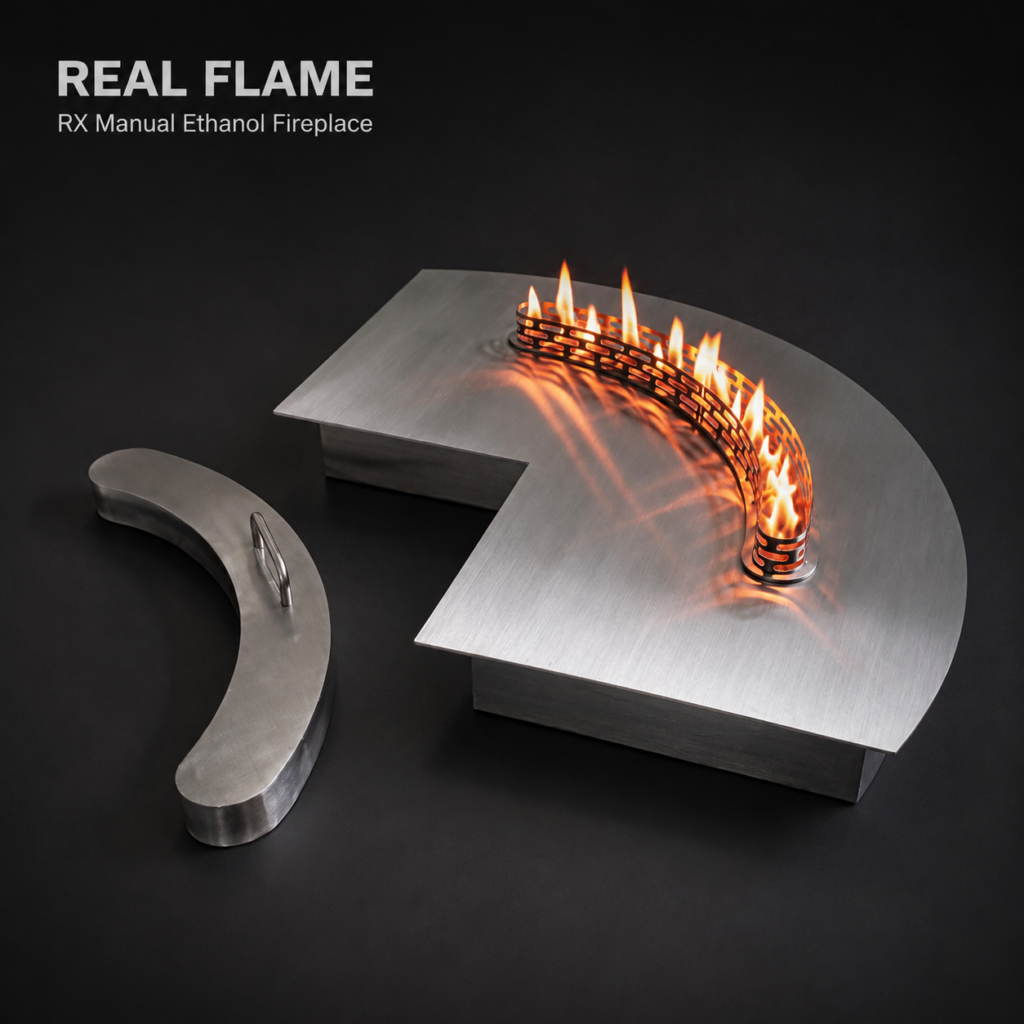
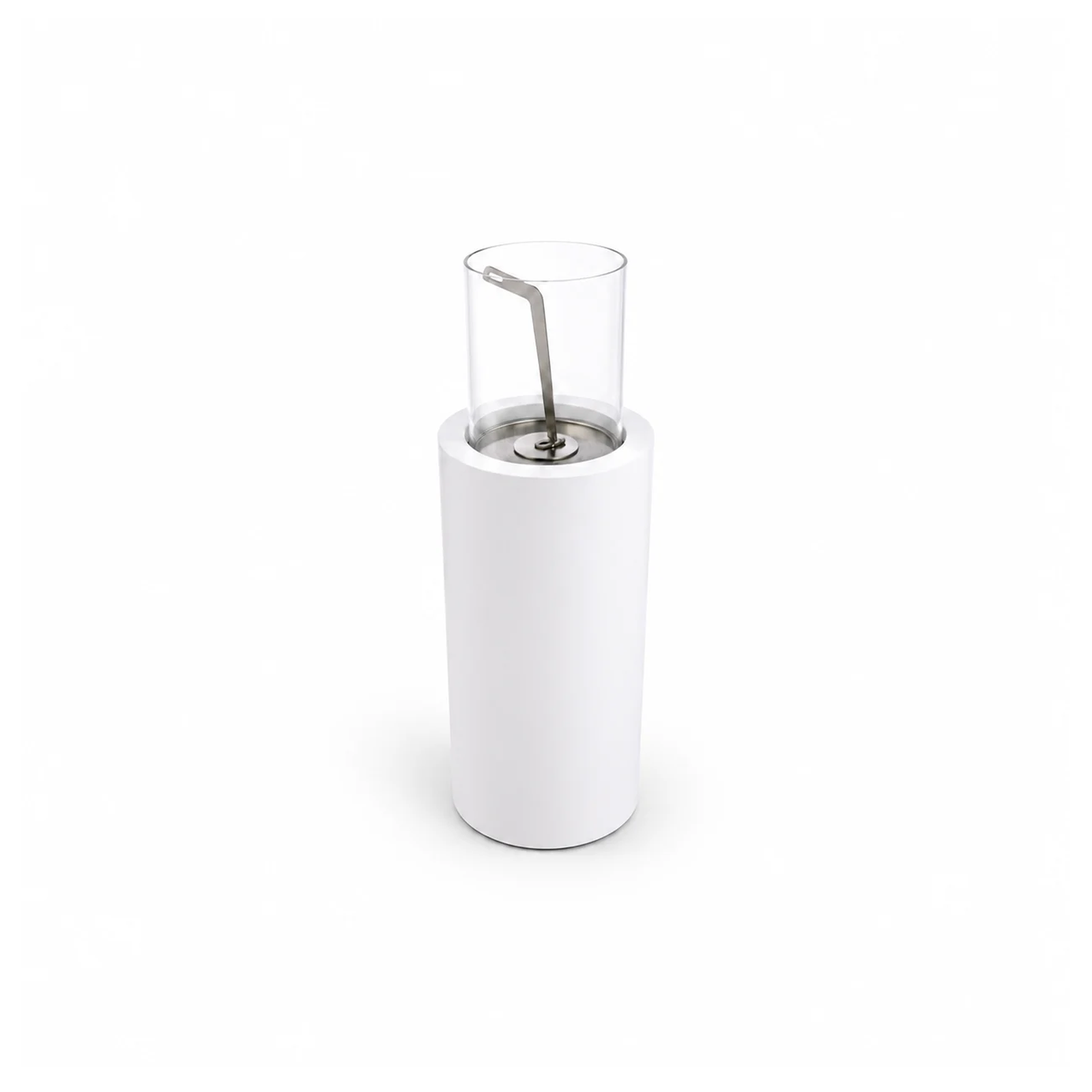
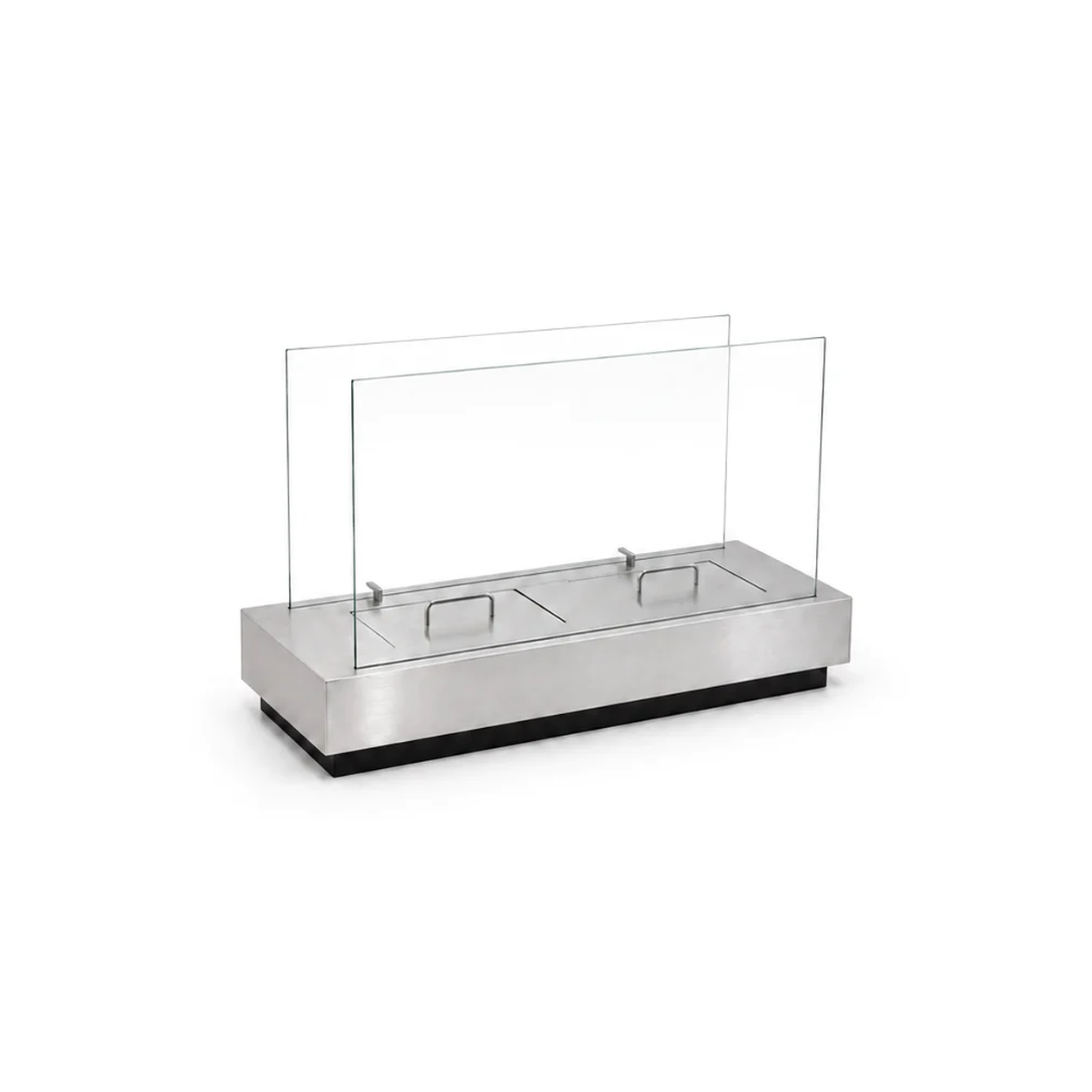
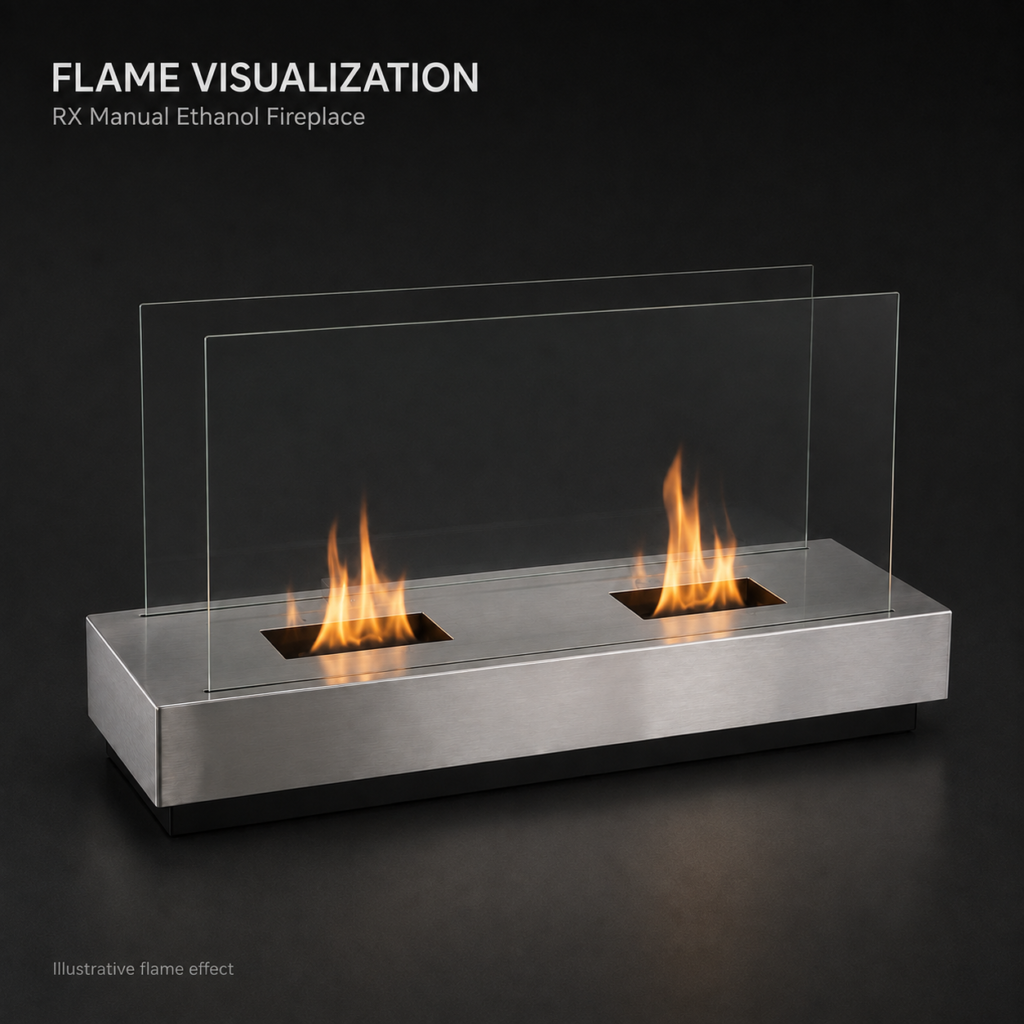
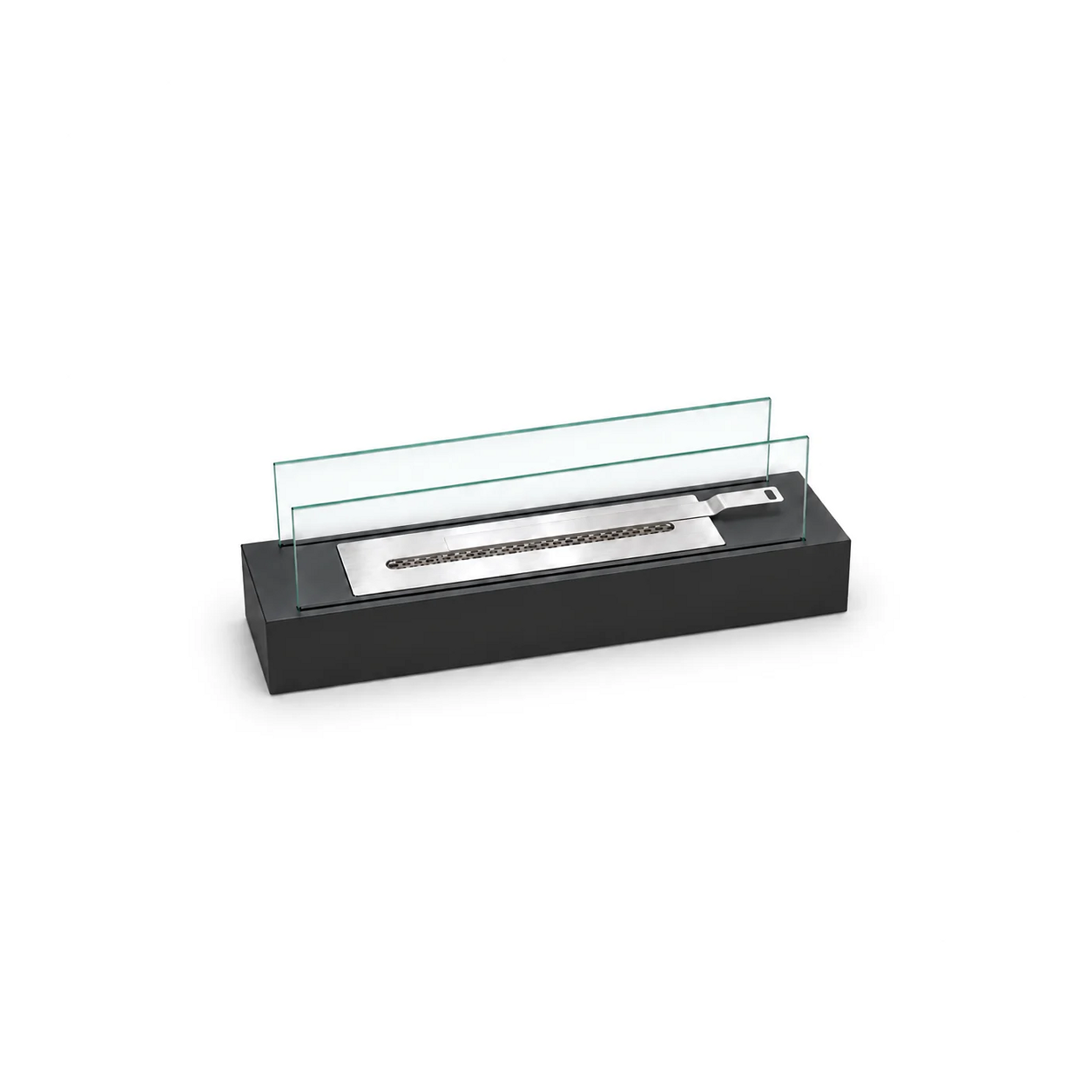
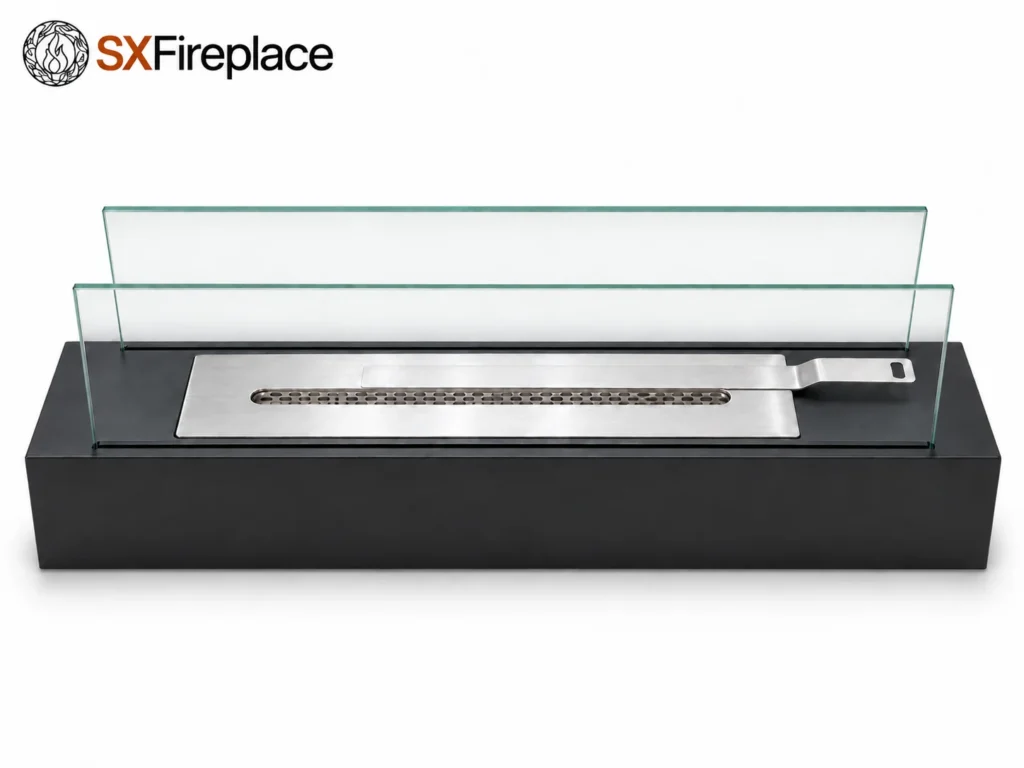
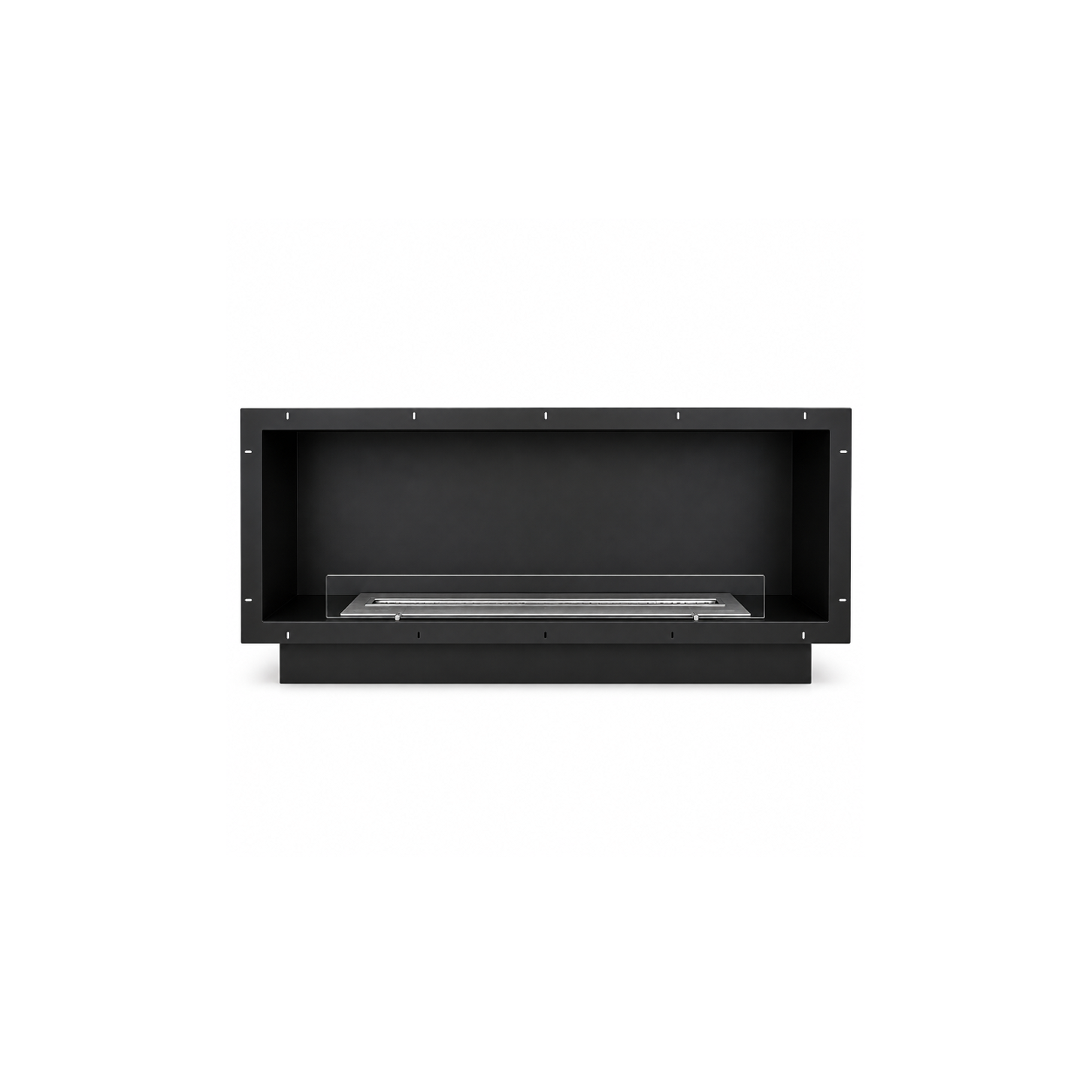
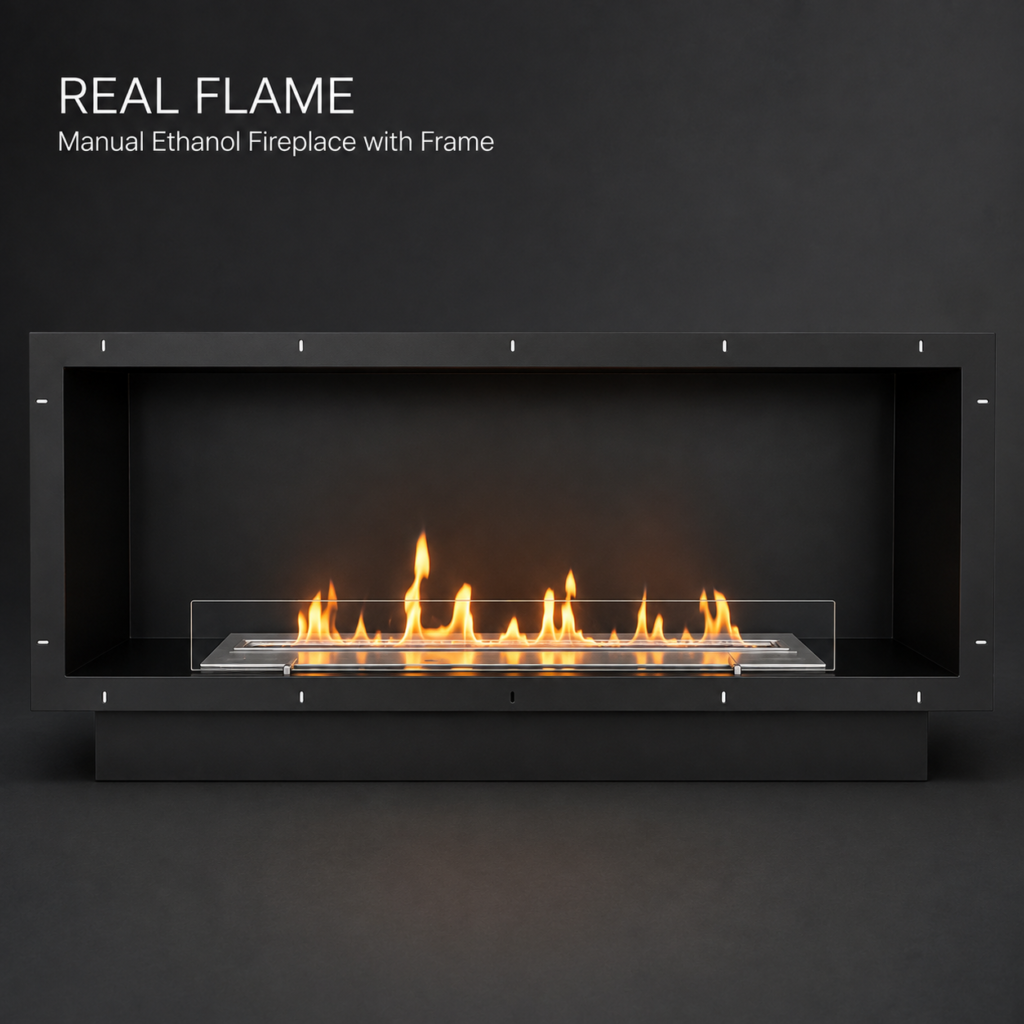
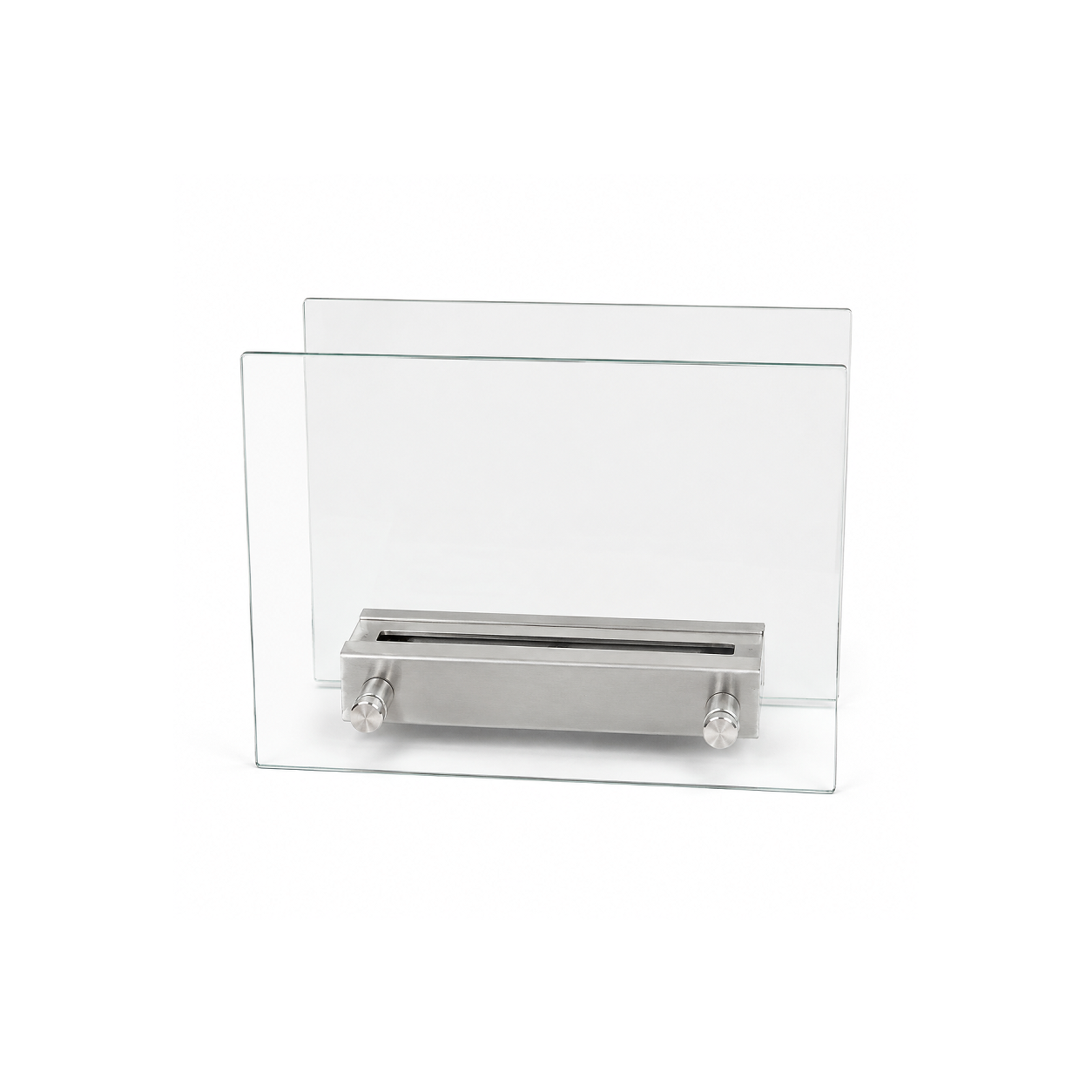
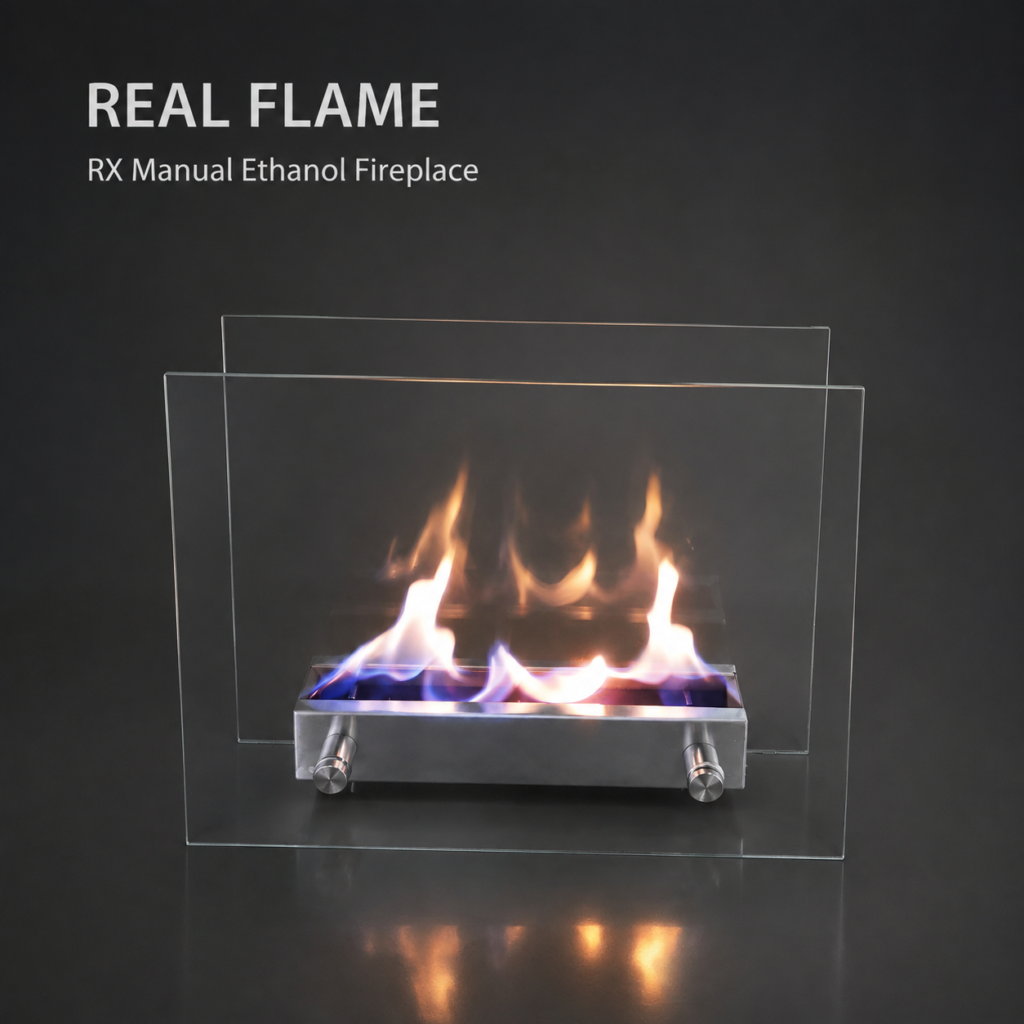
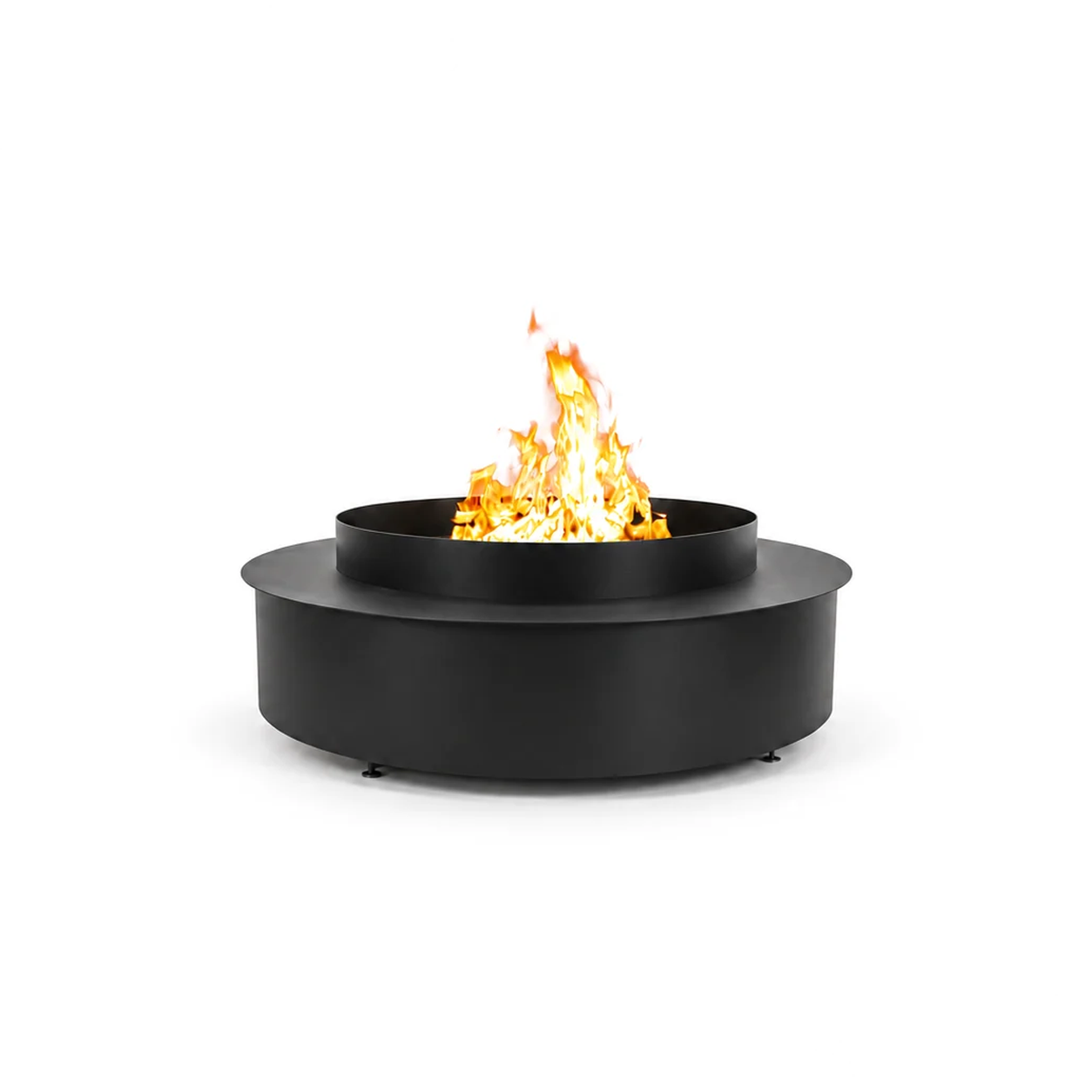
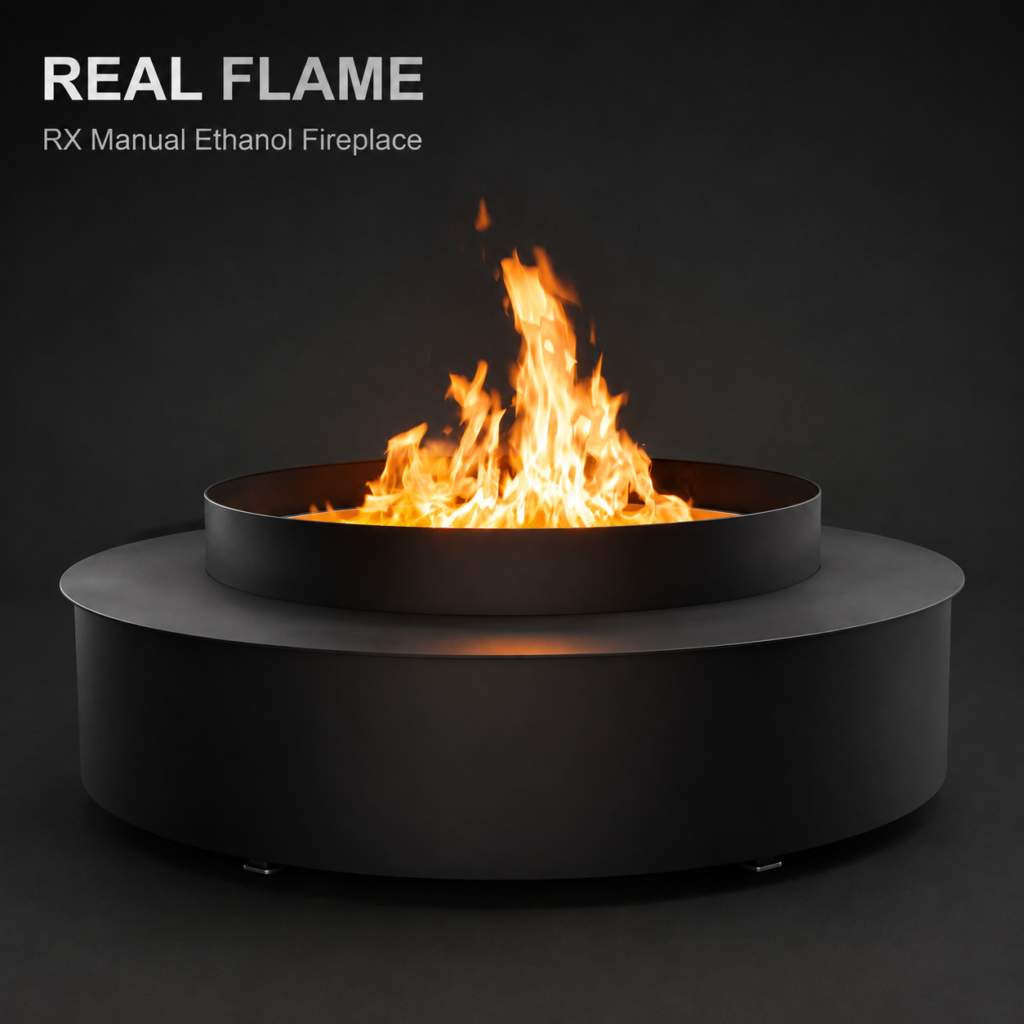

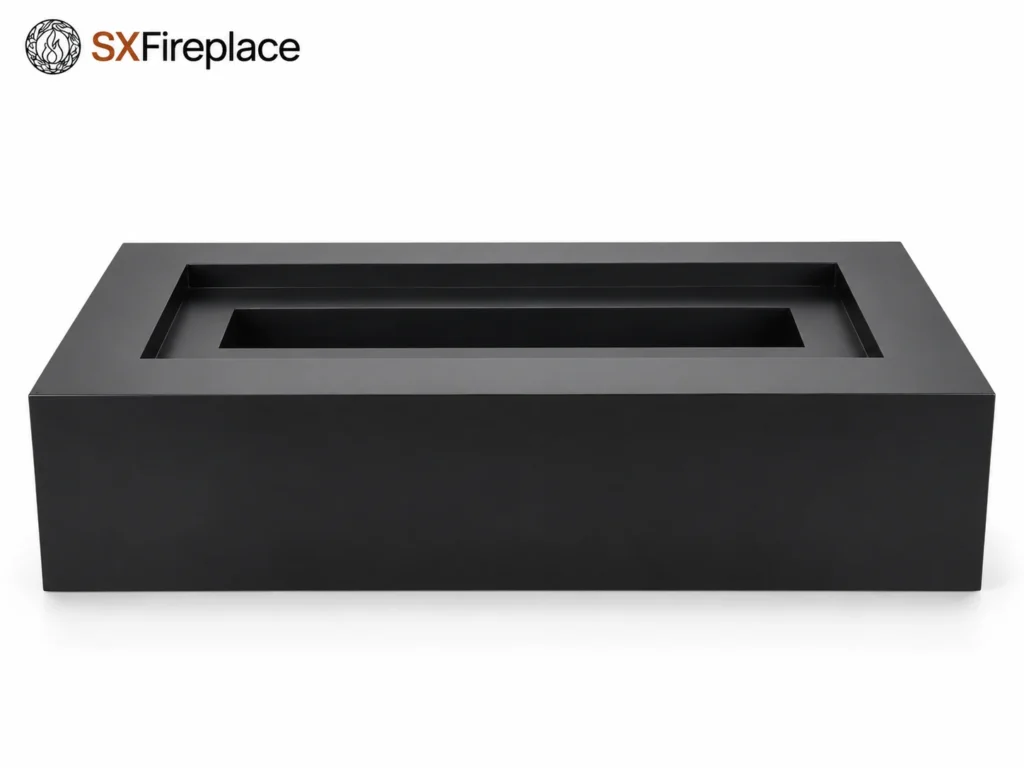
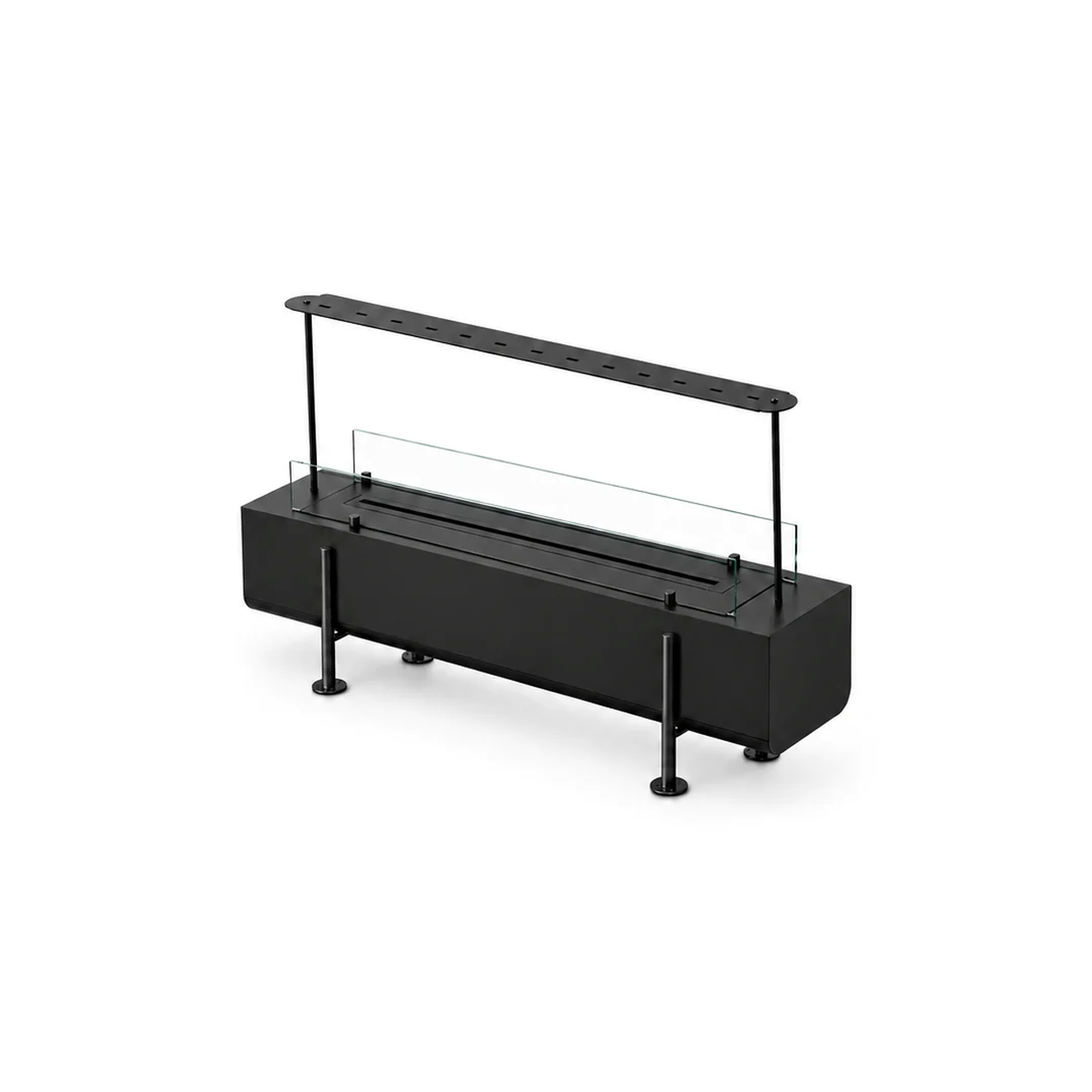
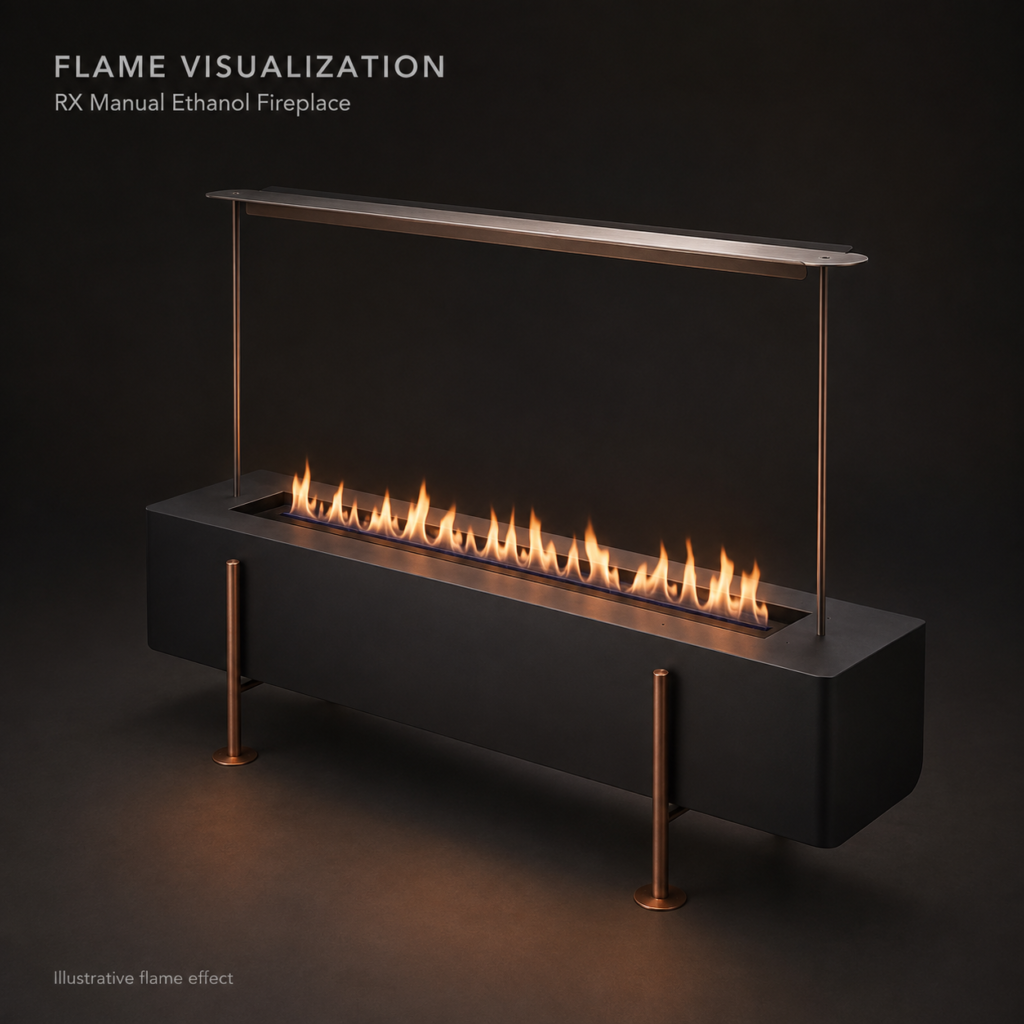
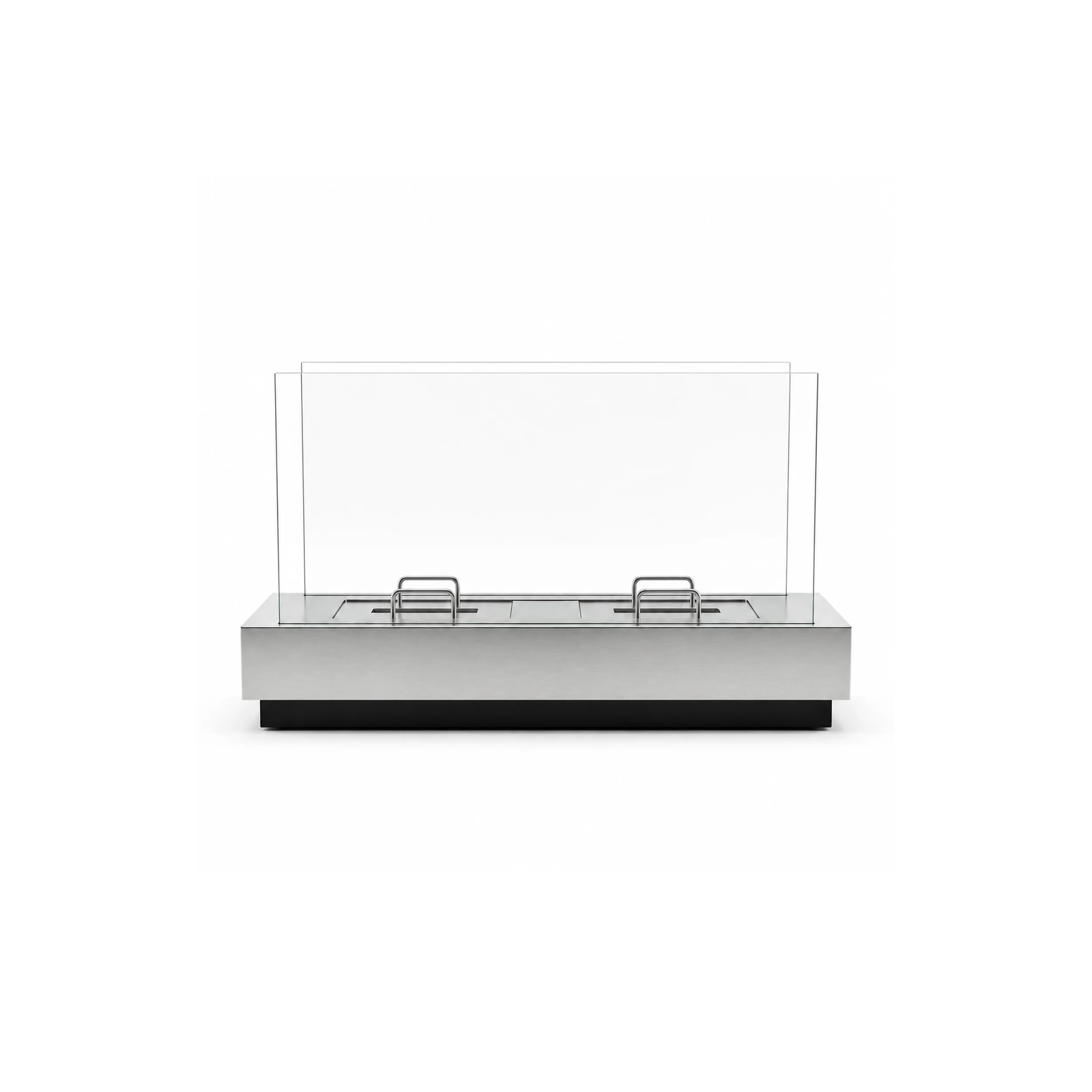
Prices shown in USD. Burner-only and complete-fireplace prices are labeled on each model. Trade and volume pricing
No models match your selection.
Try another search or filter, or discuss your requirements.
What is a bioethanol fireplace?
A bioethanol fireplace is a fireplace that burns liquid bioethanol, an alcohol fuel made from plant sugars, to produce a real, flickering flame. It needs no chimney, flue or gas connection because clean-burning ethanol produces heat, water vapor and carbon dioxide instead of smoke, soot or ash.
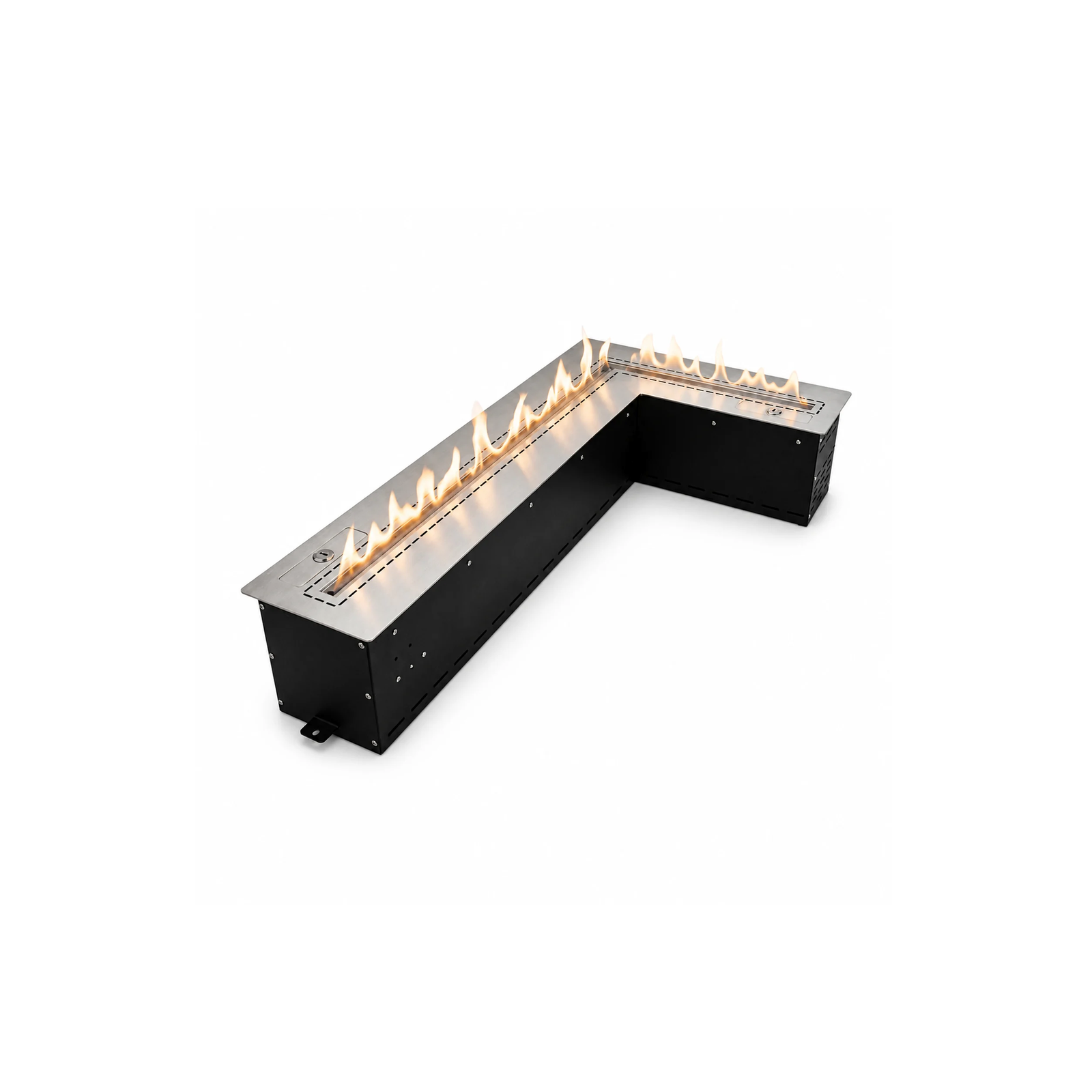
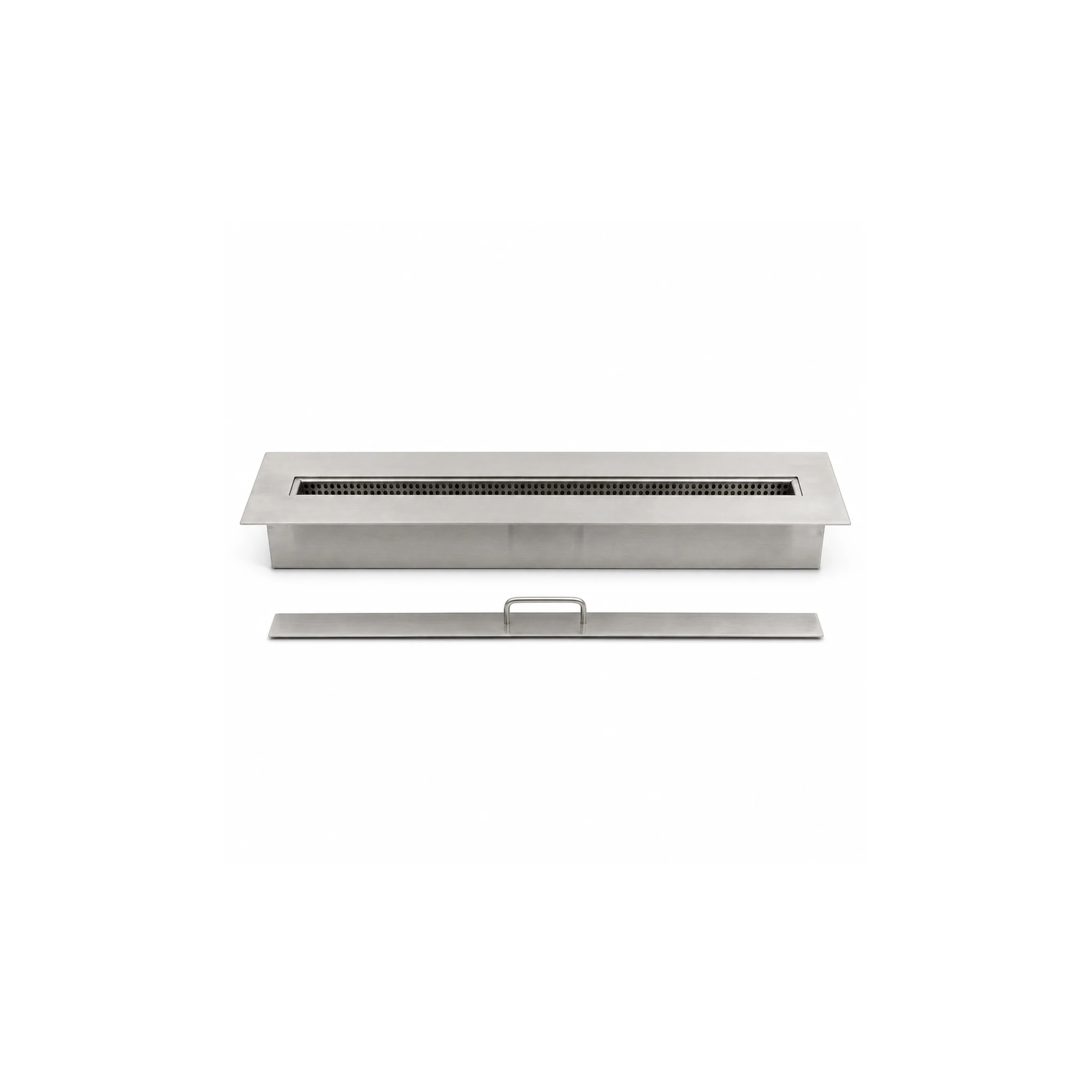
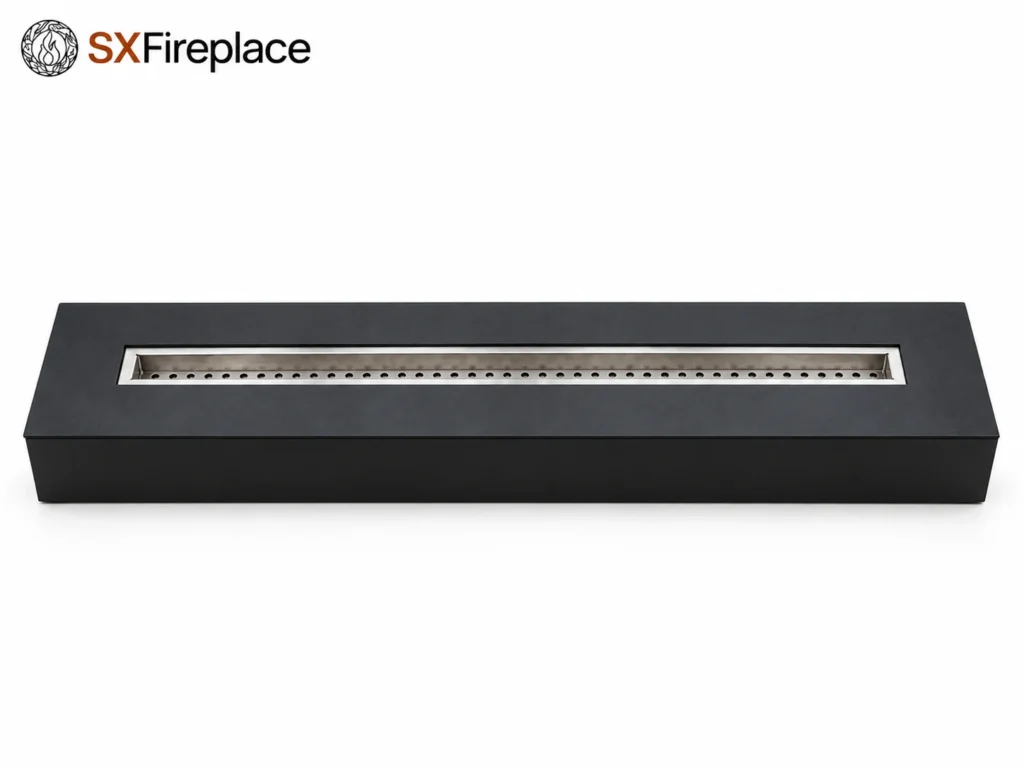
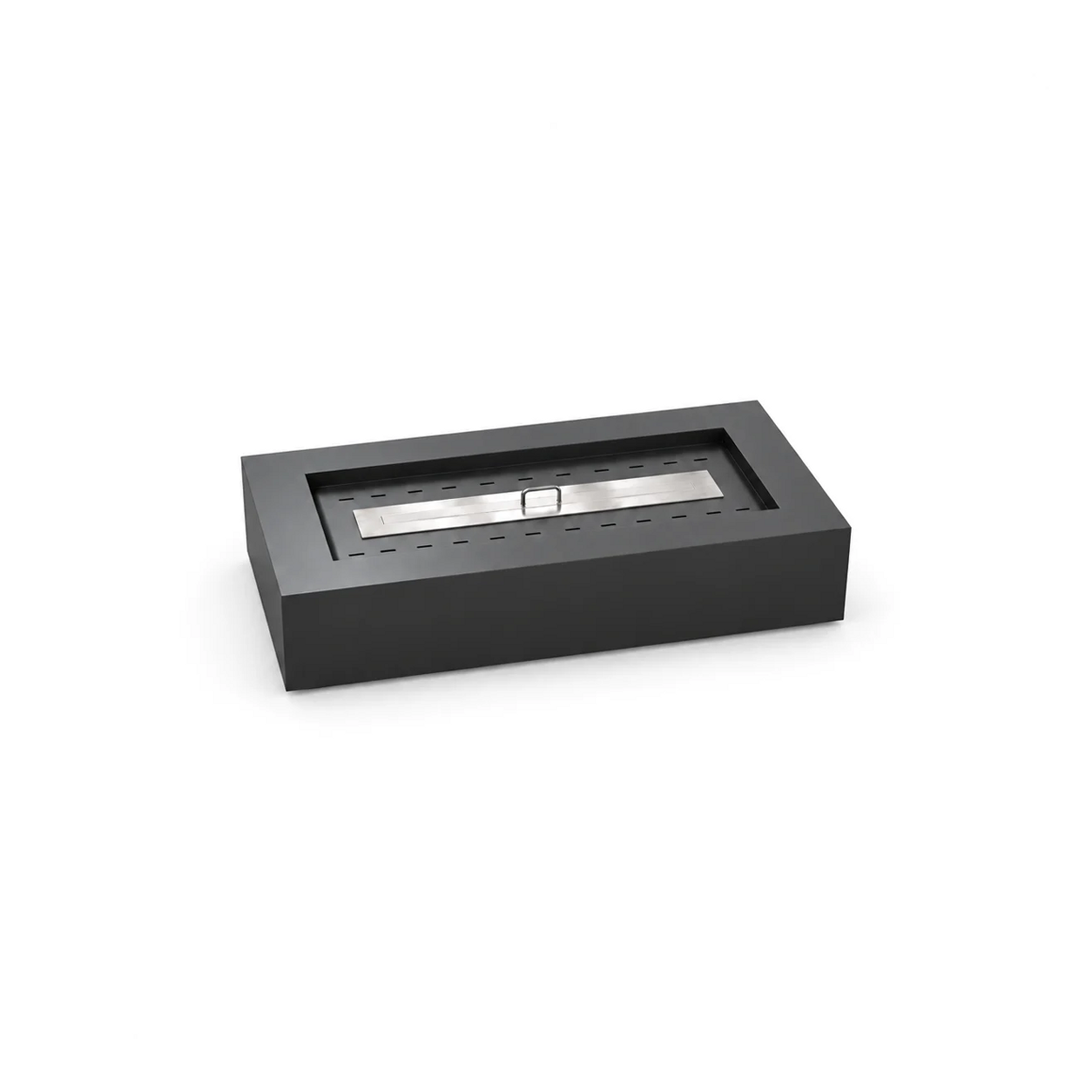
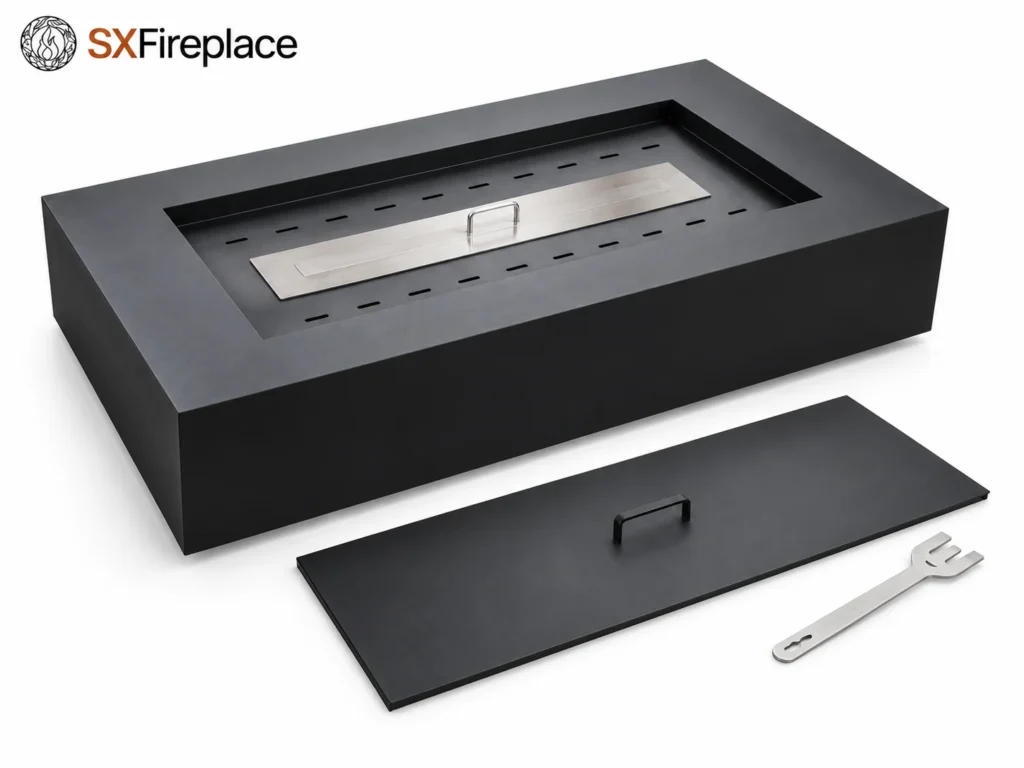
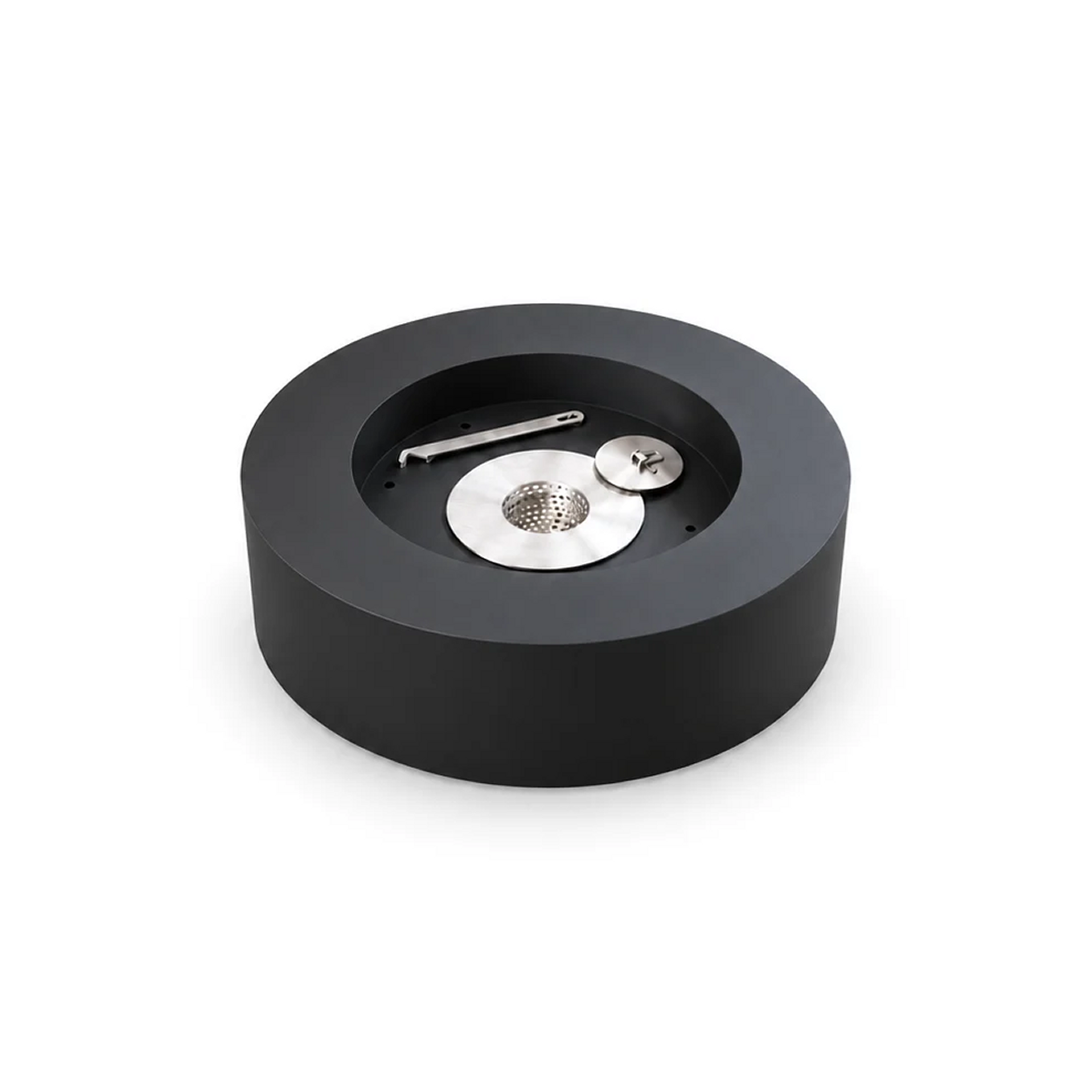
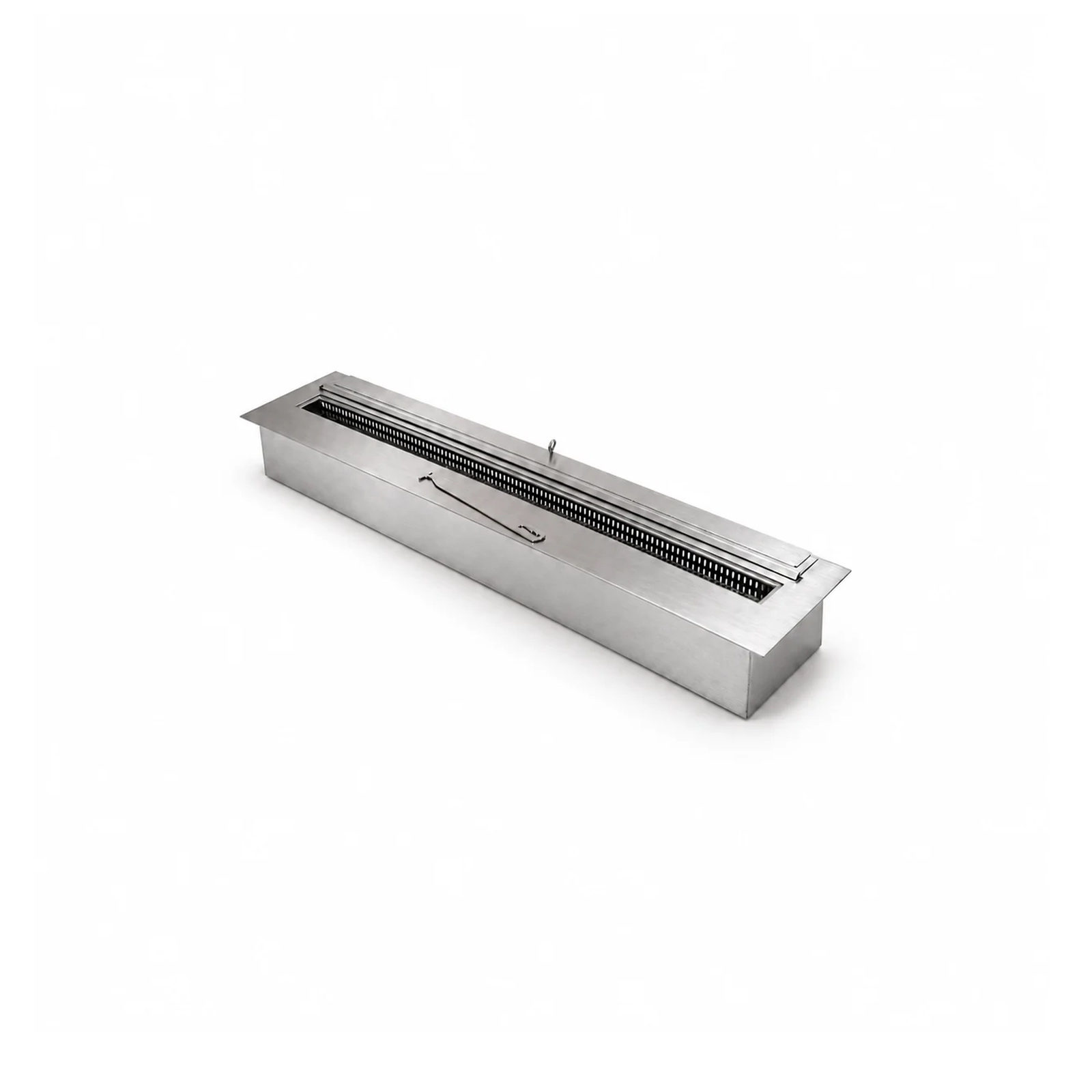
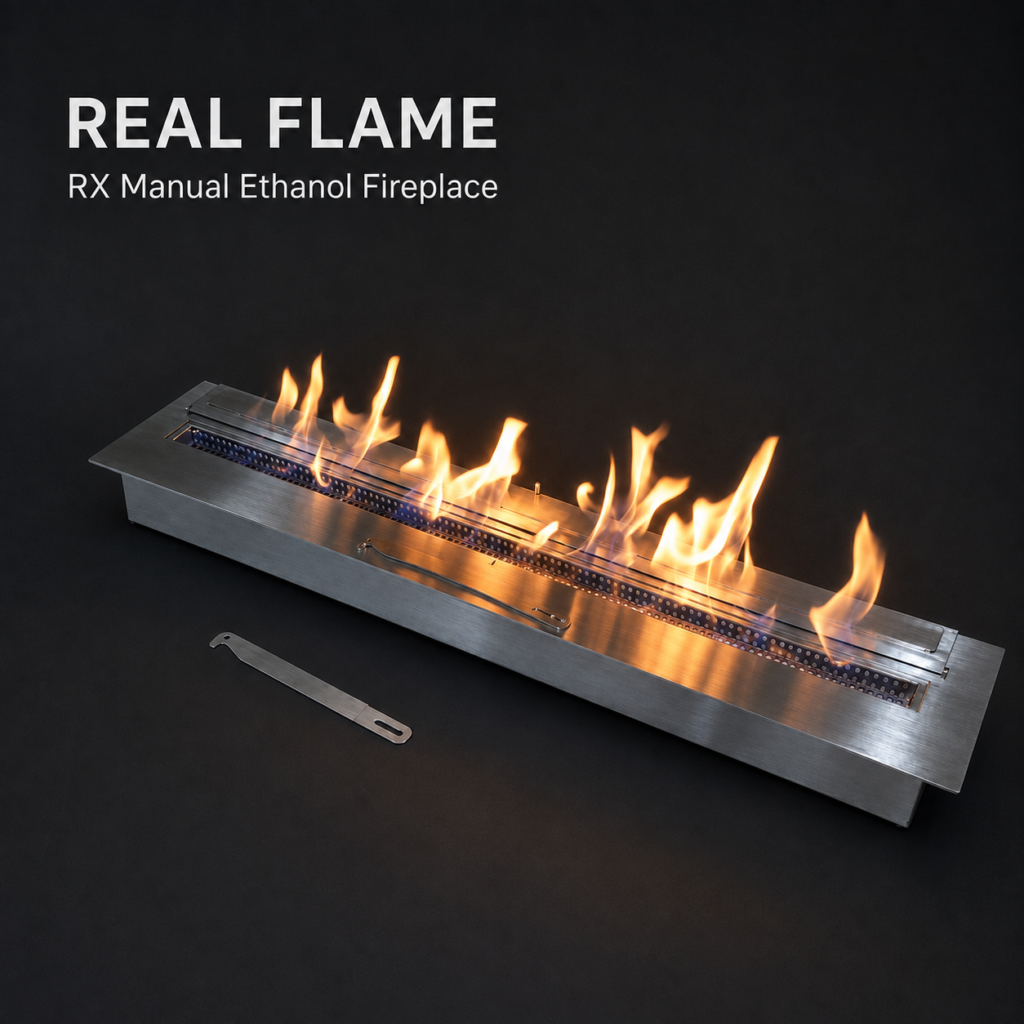
The heart of every bioethanol fireplace is the burner: a stainless-steel fuel tank and flame channel. Around it you can build a wall, frame, stone surround or piece of furniture, or buy a complete framed or freestanding unit with the enclosure and glass already included.
How does an ethanol fireplace work?
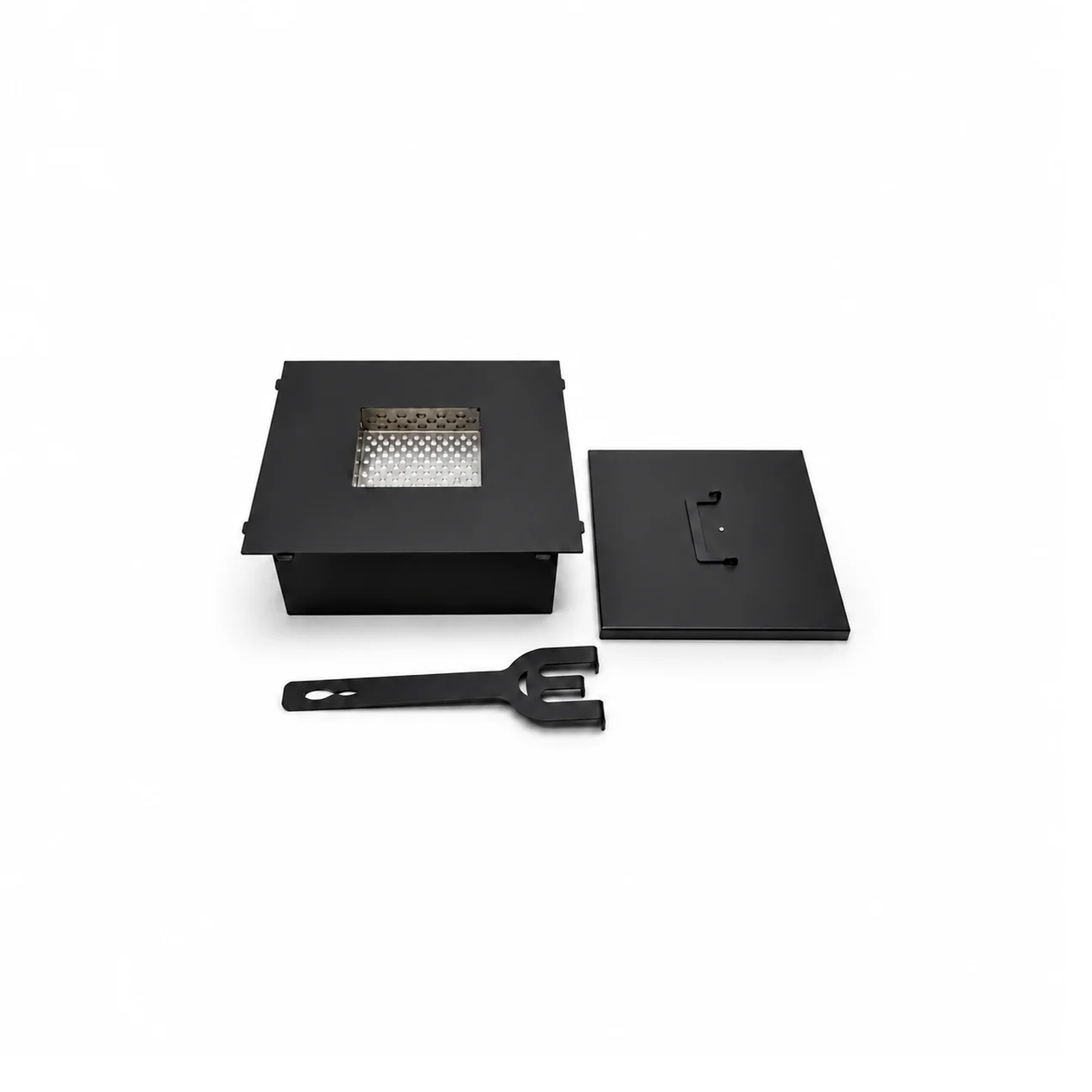
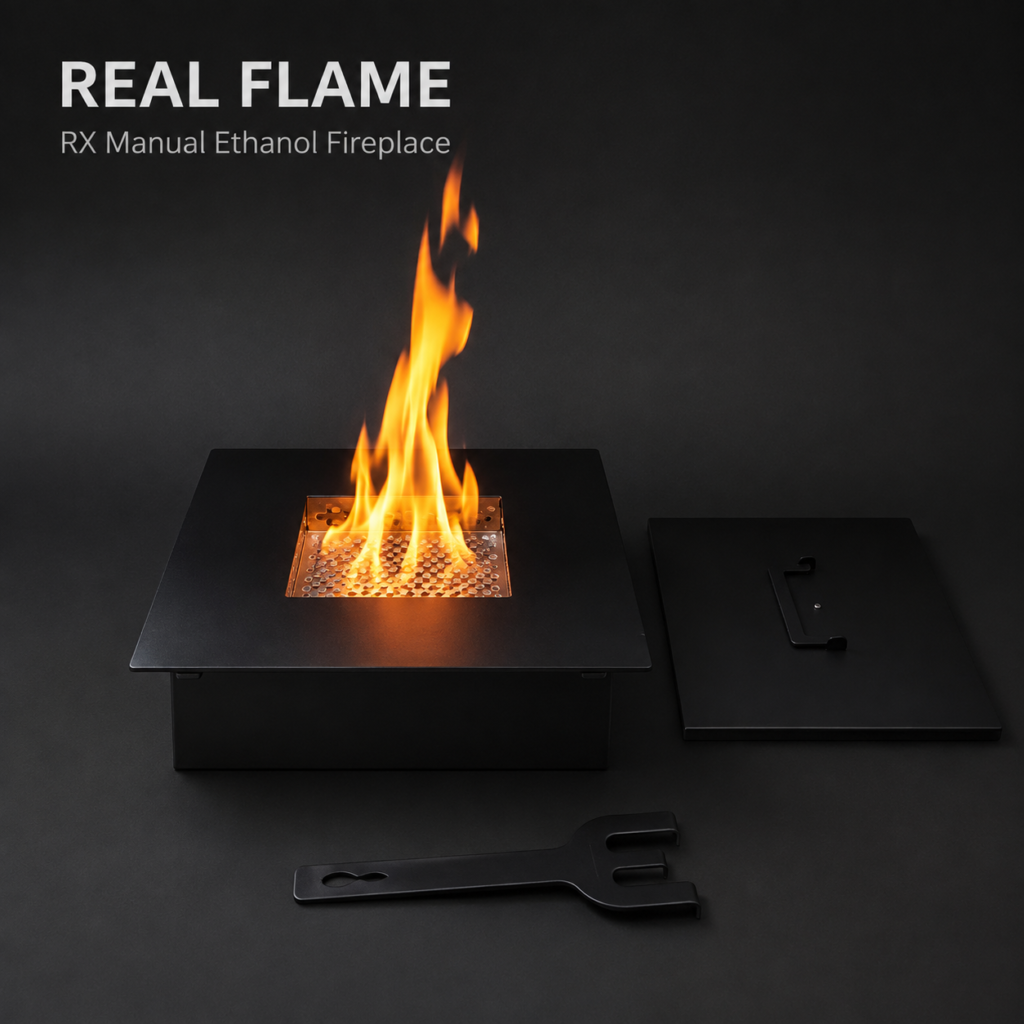
An ethanol fireplace works by burning vapor rising from a reservoir of liquid bioethanol. In a manual burner, you pour fuel into the cold burner, light it with a long lighter and put it out by closing the lid with the supplied tool. In a smart (automatic) burner, an internal pump moves fuel from a sealed tank to the flame channel, and electronic ignition, flame height and shutdown are controlled from a touchscreen, remote or app.
Never use gel fuel, methanol, rubbing alcohol or any fuel the manual does not list. SXFireplace does not sell fuel; buy it from a local supplier.
Smart vs manual ethanol burners
Choose a smart burner if you want push-button or app control and automatic refuelling. Choose a manual burner if you want the lowest price, no electrical connection and the simplest possible installation. Shape and installation type are a separate choice: both families come in linear, round and square formats.
| SXKT Smart | SXRX Smart | SXRX Manual | |
|---|---|---|---|
| Control | Touchscreen, remote and Android app (2.4 GHz Wi-Fi) | On-unit buttons and remote | Hand-operated lid or tool |
| Ignition | Electronic | Electronic | Long lighter |
| Flame adjustment | 20 settings | Not user-adjustable | On request |
| Refuelling | Automatic fill and drain from tank | Automatic filling | By hand into the cold burner |
| Power needed | Yes | Yes | No — no electronics at all |
| Extra features | Thermostat, timer, child lock; optional smart-home interface and external tank | Liquid-level monitoring, low-level, tilt protection and child lock (by configuration) | Removable or sliding extinguishing lid |
| Sizes | 1200–2400 mm (47–94 in) | e.g. SXRX-L-005: 500–2400 mm (20–94 in) | e.g. RX Lift-Lid: 500–2000 mm (20–79 in) |
| Price range | Price on request | Price on request | Price on request |
| Best for | Premium homes, media walls, hotels | Remote convenience at a mid-range budget | On request |
Read the full comparison: Manual vs smart bioethanol burners
Do bioethanol fireplaces give off heat?
Yes. A bioethanol fireplace gives off real heat, and because there is no chimney, nearly all of it stays in the room. As a rule of thumb, each liter of bioethanol burned releases about 5.9 kWh (roughly 20,000 BTU) of heat energy, so heat output rises with fuel consumption and burner length. Treat a bioethanol fireplace as supplementary or zone heating, not as the main heating system for a home.
Heat output, fuel consumption and room size by burner length
The fuel figures below come from our published SXRX model data. Real consumption varies with flame setting, fuel and room conditions. Tank volume is not the same as the permitted fill amount, so always follow the model manual.
| Burner length | Example models | Fuel capacity | Fuel use (reference) |
|---|---|---|---|
| 600 mm (24 in) | SXRX-L-005-600 · RX Manual 600 | 4 L · 4.2 L | 0.7 L/h · 0.6 L/h |
| 900 mm (35 in) | SXRX-L-005-900 · RX Manual 900 | 10 L · 6.3 L | 1.0 L/h · 0.9 L/h |
| 1200 mm (47 in) | SXKT-001-1200 · SXRX-L-005-1200 · RX Manual 1200 | 12 L · 17.5 L · 8.4 L | 0.8–3 L/h per meter · 1.4 L/h · 1.2 L/h |
| 1500 mm (59 in) | SXKT-001-1500 · SXRX-L-005-1500 · RX Manual 1500 | 15 L · 23.5 L · 10.5 L | 0.8–3 L/h per meter · 1.8 L/h · 1.5 L/h |
| 1800 mm (71 in) | SXKT-001-1800 · SXRX-L-005-1800 · RX Manual 1800 | 18 L · 28.7 L · 12.6 L | 0.8–3 L/h per meter · 2.16 L/h · 1.8 L/h |
| 2400 mm (94 in) | SXKT-001-2400 · SXRX-L-005-2400 | 24 L · 38 L | 0.8–3 L/h per meter · 3.0 L/h |
To estimate running cost, multiply the liters per hour by your local fuel price per liter. More detail: Bioethanol fuel consumption reference
Do bioethanol fireplaces need a chimney or ventilation?
No chimney is needed, but ventilation is. A bioethanol fireplace is ventless: it does not need a flue, chimney or outside vent. It does use oxygen and release carbon dioxide and water vapor, so the room needs a normal fresh-air supply and a minimum volume for the burner size you choose.
Practical guidance:
- Keep fresh air coming in. In a modern airtight home, open a window slightly or run mechanical ventilation while the fire is burning.
- Avoid small closed rooms such as bedrooms and bathrooms unless the model manual allows them.
- Check local rules. Some countries, states and cities set their own limits for unvented decorative appliances.
Are bioethanol fireplaces safe indoors?
Yes, when the appliance is installed and used according to its manual. The main risks are human: refilling a hot burner, using the wrong fuel, or placing the fire too close to curtains or furniture. Smart burners reduce these risks with automatic refuelling and monitoring; manual burners rely on the user following the procedure.
Basic rules for every model:
- Keep the clearances to combustible materials shown on the model drawing.
- Never leave a burning fireplace unattended, and keep children and pets away from the flame.
EN 16647, the European standard for decorative liquid-fuel fireplaces, is being tested; the report has not been issued yet. Request the documents for your model
Built-in, wall-mounted, freestanding or tabletop?
Built-in burner inserts. A burner insert drops into a non-combustible opening in a wall, media unit, stone surround or existing fireplace. It is the most architectural option and the most popular with designers. Ethanol fireplace inserts
Framed and wall-mounted fireplaces. A framed fireplace combines the burner with its own frame, enclosure and usually glass, so you only need a suitable opening or wall.
Freestanding fireplaces and fire pits. A freestanding unit needs no construction at all: place it on a stable, level, non-combustible floor and keep the clearances in the manual. Freestanding bioethanol fireplaces & fire pits
Tabletop fires. Small round or linear fires with a glass guard for tables and counters. Use them only on a stable, heat-resistant surface, and never move one while it is lit or hot.
How to choose a bioethanol fireplace
- Pick the control family. Smart (SXKT or SXRX Smart) for convenience, manual (SXRX Manual) for simplicity and price.
- Choose the length. Allow for the room size and the visual width you want. For a media wall, many designers match the burner to the TV width or slightly narrower.
- Check what is supplied. Burner only, burner plus glass, or a complete fireplace. Each model page states the supply scope.
- Get the drawing before you build. Cut the opening from the installation drawing for your exact size, never from the nominal length.
Still deciding? Read the bioethanol fireplace buying guide or send us your room or opening size.
For distributors, builders and designers
Every model on this page is available wholesale, from one unit, with installation drawings and model documents. To put your brand on the burner and packaging, see OEM and private label.
Bioethanol fireplace FAQs
Do bioethanol fireplaces need a chimney?
No. Bioethanol fireplaces are ventless and need no chimney, flue or gas line, because the fuel burns to heat, water vapor and carbon dioxide without smoke or soot. The room still needs normal ventilation and must meet the minimum size in the model manual.
Do bioethanol fireplaces actually give off heat?
Yes. Each liter of bioethanol releases roughly 5.9 kWh of heat, and with no chimney almost all of it stays in the room. Larger burners that use more fuel per hour produce more heat. They work best as supplementary or zone heating rather than whole-house heating.
Are bioethanol fireplaces safe to use indoors?
Yes, when installed and operated according to the manual. Use only the specified fuel, never refill a hot or burning unit, keep the clearances on the drawing, ventilate the room and never leave the fire unattended. Smart burners add automatic refuelling and safety monitoring.
How much fuel does an ethanol fireplace use per hour?
Most burners use roughly 0.5 to 3 liters per hour depending on length and flame setting. For example, our SXRX-L-005 uses about 0.7 L/h at 600 mm and 1.4 L/h at 1200 mm, and the SXKT-001 manual gives 0.8–3 L/h per meter of burner.
Do listed prices include the whole fireplace?
Not always. Each model page states whether the price covers the burner only, the burner with glass, or a complete fireplace with frame. Shipping, fuel and installation are always extra. Your written quotation lists every supplied part.
Where do you ship, and how long does it take?
We ship worldwide, including the United States, Canada, the UK, the EU and the Gulf states, from our factory in Jiangsu, China. Standard units have a reference lead time of 7–15 days; transit time depends on EXW, FOB or DDP terms and the route.
The reading room
Compare models and planning resources.
01 / Planning guide
Manual vs Smart Bioethanol Burners
02 / Planning guide
Square vs Round Bioethanol Burners
03 / Planning guide
SXRX Stainless Steel Bioethanol Burner Sizes and Cutout Planning
Use the guide and instructions for your selected family and model.
Project enquiries.
Send the model, dimensions, quantity and destination.