
European Fireplace Trends for 2026

Explore fireplace design ideas for 2026, compare ethanol and electric flame options, and ask the right installation, maintenance and safety questions.
On this page
Design ideas and safety questions for choosing the right flame
A fireplace can anchor a living room, divide an open interior or bring movement to a quiet corner. For a European project in 2026, the challenge is choosing a design that still works once the room is furnished and someone has to operate it every day.
At SXFireplace, we recommend considering integrated layouts, more deliberate flame choices and practical controls alongside the visual design. These are useful directions for architects, designers, dealers and homeowners to explore. The right combination depends on the room, the people using it and the requirements where it will be installed.
Design the fireplace with the room
A long, low fireplace can sit comfortably within a stone or plaster wall. A corner or two-sided installation can connect seating areas. A compact opening may suit a smaller room better than a flame line that stretches across the entire wall. Start with proportion and sightlines rather than choosing the longest available burner.
Review the design from seated and standing positions. Consider daylight, reflections, furniture and the route people take through the room. For a fireplace beneath a television, obtain the appliance manufacturer’s requirements for clearances and heat management before fixing either position.
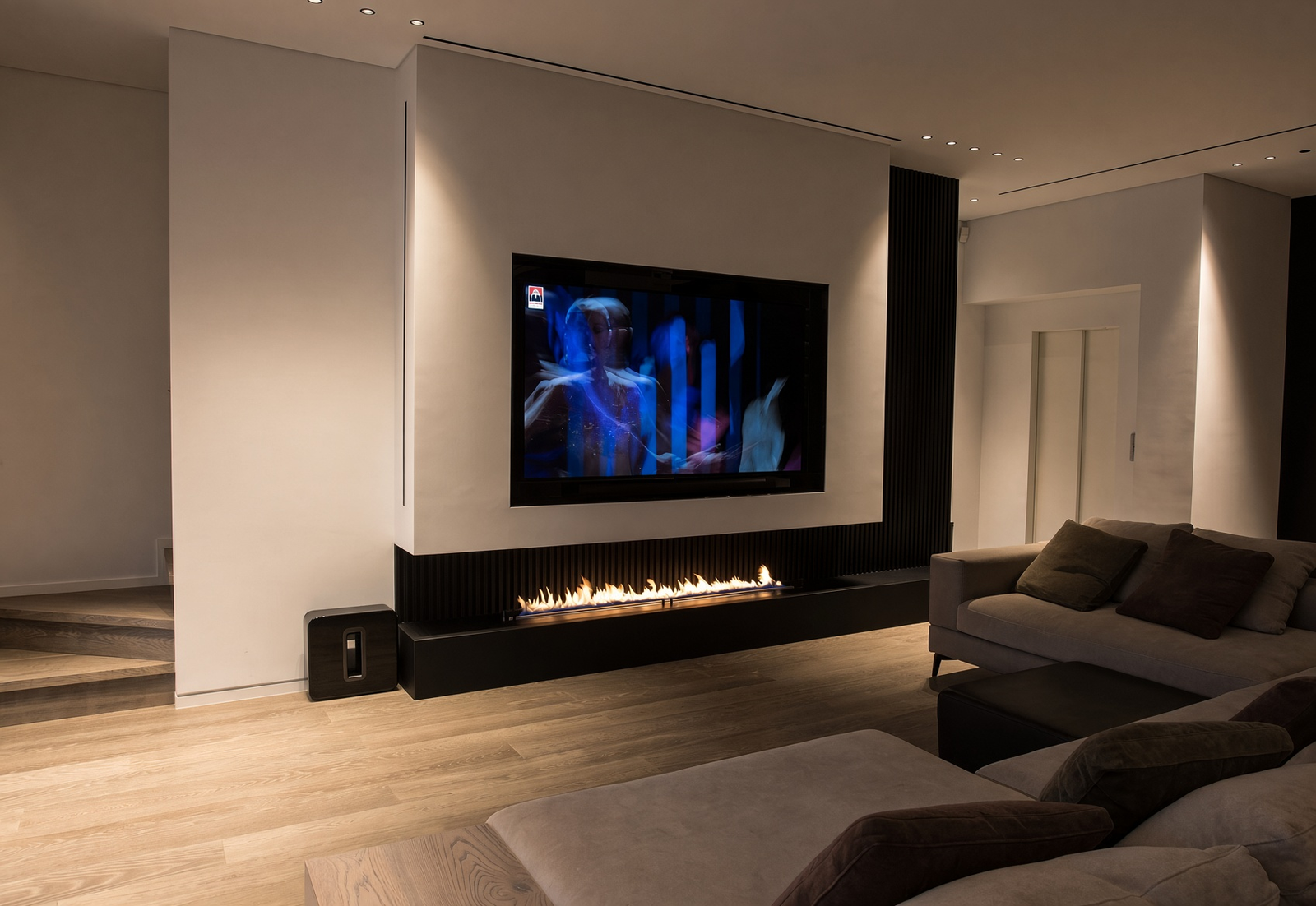
Build service access into the drawing. A concealed installation still needs a practical way to reach the components that require inspection, cleaning or replacement. Agree on the surround materials and installation details before the joinery or stonework is ordered.
Choose the flame technology around daily use
The choice between ethanol and an electric flame effect should follow the brief. Decide whether a real flame is essential, whether added heat is welcome and who will handle routine maintenance.
Manual ethanol fireplaces produce a real flame and require the user to carry out key operating steps. Some have a relatively simple arrangement of components, but the filling, ignition and extinguishing procedure needs careful attention. Their suitability depends on the specific product and installation.
Automatic ethanol fireplaces also burn liquid fuel. Depending on the model, electronic systems can manage functions such as filling, ignition and shutdown. Ask which tasks are automated and which still require the user. A remote control alone tells you little about the fuel system or its protective functions.
Electric fireplaces create a flame effect without burning ethanol. Water-vapour fireplaces are one type of electric system, using illuminated mist to produce a moving effect. They can be worth considering where handling liquid fuel would be inconvenient. Check whether the chosen model includes a heater, how it is powered and how much sound it makes in a quiet room.
For a water-mist system, confirm the water supply, permitted water quality and cleaning routine. These vary by product. For example, published manufacturer guidance includes regular cleaning of the water-handling components. Compare the actual maintenance instructions before deciding which technology fits the household or venue.
Specify how the fireplace will be operated
Convenient controls are useful when the operating sequence is clear. Ask the supplier to explain startup, normal shutdown and what happens if power is interrupted or a fault occurs. Request documentation for any claimed protection against overfilling, overheating or unsafe refuelling.
Confirm how the owner will recognise a fault and contact service. Establish who may operate the fireplace, where the instructions will be kept and how a new user will learn the procedure.
Automatic functions do not remove the need to follow the operating manual. For a rental property or commercial setting, confirm suitability for that use and agree who is responsible for supervision and maintenance.
Resolve air supply and fuel handling early
An ethanol flame produces heat and combustion products within the room. Flueless does not mean ventilation-free. Check the manufacturer’s minimum room size and ventilation requirements against the actual space, including the conditions when doors and windows are closed. The European Commission’s safety requirements address room sizing, ventilation and the risks associated with these appliances.
Use only the fuel specified for the model. Never add fuel while the appliance is burning or still hot; follow the stated shutdown and cooling procedure. Plan a suitable storage location and a filling routine that follows the instructions and local rules. Keep required clearances from curtains, furniture and other combustible materials. Never leave a burning fireplace unattended, and keep children and pets away from the flame and hot surfaces.
Discuss these details while the design can still change. If the room cannot meet the appliance’s conditions, reconsider the model, its location or the flame technology before construction begins.
Check the standard behind the claim
Use the relevant part and edition of EN 16647 when comparing products. Manual and automatic fireplaces need different evidence reviews.
EN 16647-1:2025: Manual Ethanol Fireplaces
EN 16647-1:2025 addresses manually operated decorative alcohol fireplaces for domestic use. Its scope includes ready-to-use freestanding, wall-mounted and built-in appliances with an integral fuel container or one forming a single unit with the fireplace. It excludes models above 4.5 kW and those with a defined heating function. These are scope boundaries, not a blanket European sales ban.
For a manual model, request evidence covering the complete supplied appliance, specified fuel and filling or refuelling arrangements. Ask about spill and leakage protection, stability and combustion emissions. Where glass guards are fitted, clarify their protective role and how accessible surface temperatures have been assessed. Obtain the relevant test report and operating instructions.
EN 16647-2:2026: Automatic Ethanol Fireplaces
EN 16647-2:2026 addresses automatically operated decorative alcohol fireplaces for indoor domestic use. Its scope includes electronic controls for basic operation, including an automatic filling system, and complete appliances with an integral burner. It excludes appliances with a declared heating function or a flue connection.
For an automatic model, ask for documentation of controlled filling, protection against spills and overfilling, abnormal-condition detection and controlled shutdown. Establish which functions the specific product includes and how they are tested. Check that the report and installation instructions match the complete supplied configuration. A remote control or a list of sensors alone does not demonstrate compliance.
For either type, confirm the model, laboratory and applicable test methods. The EU explains that standards are generally voluntary, while applicable legislation remains binding. Check national and local requirements with the appropriate project professional, especially for public or commercial premises beyond domestic decorative use.
Ask these questions before placing an order
A useful specification should answer the practical questions as clearly as the visual ones. Before approving the product, ask:
- Is this exact model suitable for the intended room, country and type of use?
- What room size, ventilation, clearances and surround construction does it require?
- Which fuel, electrical supply or water connection is needed?
- Who will operate it, and what does each filling or maintenance cycle involve?
- Which test documents, installation drawings and operating instructions are available?
- How will servicing work after installation, and which warranty terms apply?
Ask the installer and supplier to resolve any gaps before the surrounding finishes are completed. A drawing, quotation and attractive flame video each show only part of what the finished installation will involve.
Start with a project brief
For a 2026 fireplace project, aim for a design that suits the space and an operating routine the owner can follow confidently. Send SXFireplace the room dimensions, proposed layout, installation country and preferred flame effect. Those details provide a useful starting point for discussing options and identifying the product information the project needs.