
Ethanol Fireplace Glass Guards: What to Confirm Before Adding One
Understand how glass guards affect a fireplace arrangement, what to check in the assembly, and why taller glass does not replace supervision.
- Author
- Liang Ethan
- Technical lead
- Liang ZhengXiangAll models
- Published and reviewed
On this page
Is taller fireplace glass always better? No. A glass guard can form a visual boundary and help limit accidental contact, but height alone does not make an installation suitable.
Glass belongs to the whole arrangement All steps remain visible. Play the illustration or select Next step.
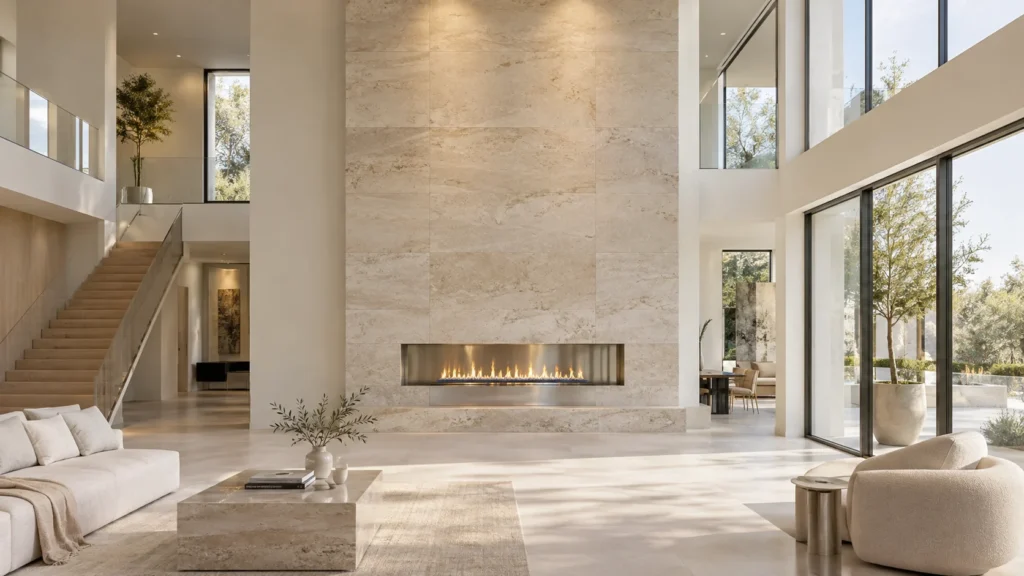
Why enclosing the flame changes things
Adding tall panels or closing all four sides can change air movement and heat around the burner. The glass is no longer just decoration: it becomes part of the arrangement surrounding the flame. A panel copied from a photograph may therefore behave differently on another installation.
Keep required air openings and service access clear. Do not add an enclosure or reduce clearances without having the complete arrangement reviewed.
Choose the assembly, not just the glass
The glass material, distance from the flame, edge treatment and fittings must suit the actual installation. “Tempered” or “heat-resistant” is not a complete specification, and there is no single height or thickness that approves every ethanol fireplace guard.
Show the glass and its mounting points on the same drawing as the burner and surround. The fireplace drawing checklist helps keep those details together.
It still needs supervision
The glass and fittings can become hot. They are not a childproof enclosure, so keep children and pets away.
After cooling, check for cracks, chips or loose fittings. Follow the component’s cleaning instructions and avoid sudden cooling of hot glass. If a panel is damaged, arrange a suitable replacement before further use; do not move hot glass or improvise clips beside a flame.