
Wood Stove Output: ECB50 vs K0134
A practical guide to choosing between compact and high-output wood stoves using heat demand, footprint, weight and installation requirements.
On this page
Choose a wood stove whose output, weight and installation requirements fit the building.
To make the decision concrete, this guide compares the planning profile of the SXFireplace ECB50 Compact Cast Iron Wood-Burning Stove with the SXFireplace K0134 High-Output Wood-Burning Stove.
Why nominal room size is only a starting point
Size a wood stove for the room’s heat demand. Insulation, ceiling height, windows, air leakage, winter conditions and adjoining spaces all affect that demand; floor area alone is insufficient.
A qualified heating professional or installer can assess the building and calculate heat loss. That calculation is the safest basis for choosing between a compact stove and a higher-output model.
When a compact stove makes sense
The ECB50 has a stated output range of 6–10 kW. It measures 435 × 380 × 600 mm (W × D × H), giving it a compact 435 × 380 mm footprint. This can be helpful when the hearth needs to fit into a smaller living room, cabin or renovation layout without losing the visual character of a cast-iron stove.
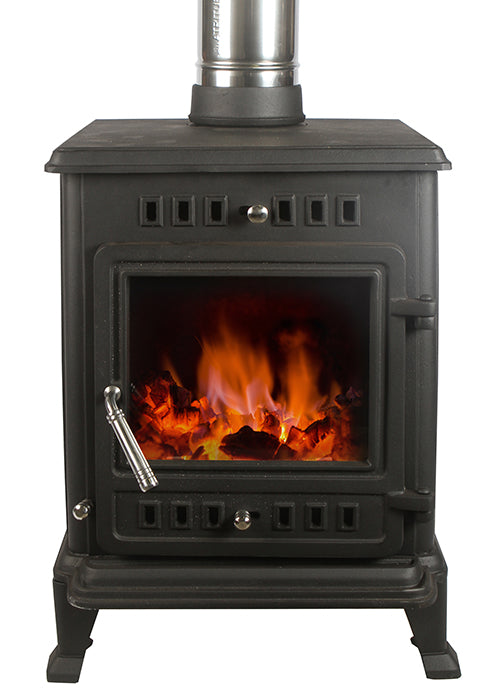
Compact does not mean lightweight or installation-free. The ECB50 has a net weight of 82 kg and a 5-inch flue connection. The floor, hearth, clearances and chimney route all need to be checked before the stove arrives.
A compact model may be the better starting point if:
- usable floor area around the proposed hearth is limited;
- the calculated heat demand sits within the appliance’s stated 6–10 kW range;
- you prefer a traditional focal point with a less dominant footprint;
- the installation route can safely accommodate an 82 kg stove.
When higher output is justified
The K0134 is rated at 12 kW. It is intended for situations where the building assessment supports greater heating capacity, and its freestanding shape gives it a stronger presence in a living room, cabin or hospitality interior.
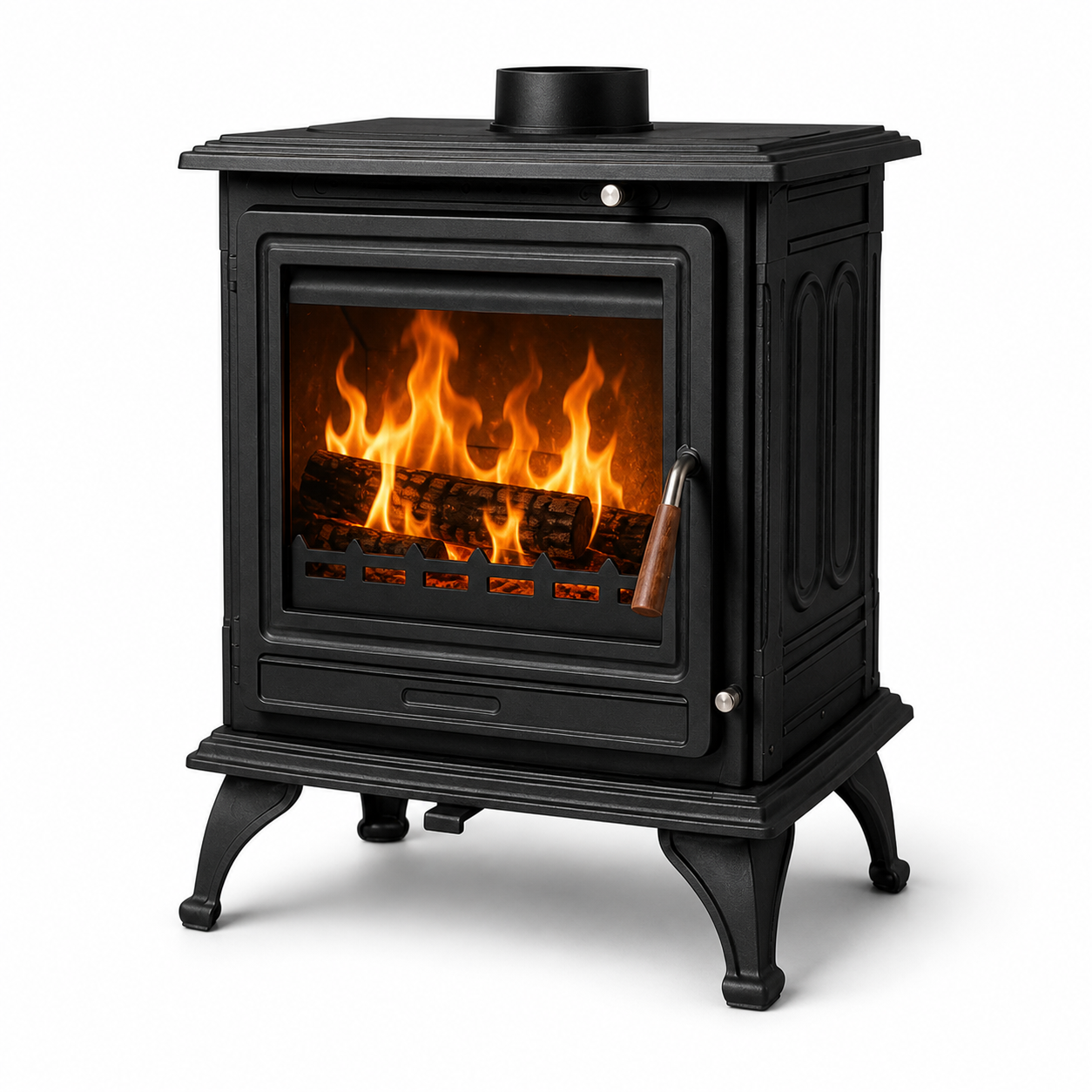
At 144 kg net weight, the K0134 calls for careful delivery and hearth planning. It also uses a 5-inch flue connection, but the matching diameter does not mean its chimney design is the same as another stove’s. Draft, route, height, clearances and local rules remain project-specific.
A higher-output model may be appropriate if:
- a professional calculation supports a 12 kW heat source;
- the heated area can use that output without frequent overheating;
- the stove is intended to be a substantial visual feature;
- the building, access route and hearth can accommodate a 144 kg appliance.
What happens when a stove is oversized?
An oversized stove can overheat the room and encourage operation at an inefficient low setting. Size the appliance for the building’s heat demand and chimney arrangement.
What happens when a stove is undersized?
An undersized stove can struggle in cold weather and require sustained high-output operation. Match its output range to the room’s heat demand.
A pre-purchase checklist
- Heat requirement: obtain a heat-loss assessment for the actual space.
- Hearth position: confirm required clearances and floor protection.
- Chimney route: assess flue height, draft and routing with a qualified professional.
- Weight and access: check floors, steps, doors and the final placement area.
- Fuel and storage: plan for suitable wood and dry storage.
- Local compliance: follow the appliance instructions and all applicable building and fire requirements.
ECB50 or K0134?
The ECB50 is the logical model to investigate when a compact footprint and a 6–10 kW output range match the project. The K0134 is the stronger candidate when a verified 12 kW requirement and a more substantial installation are appropriate.
Neither model should be selected by output alone. Compare the ECB50 specifications and K0134 specifications, confirm current availability with SXFireplace, and involve a qualified professional before purchase or installation.