

Are Bioethanol Fires Any Good? The Disadvantages, Honestly
On this page
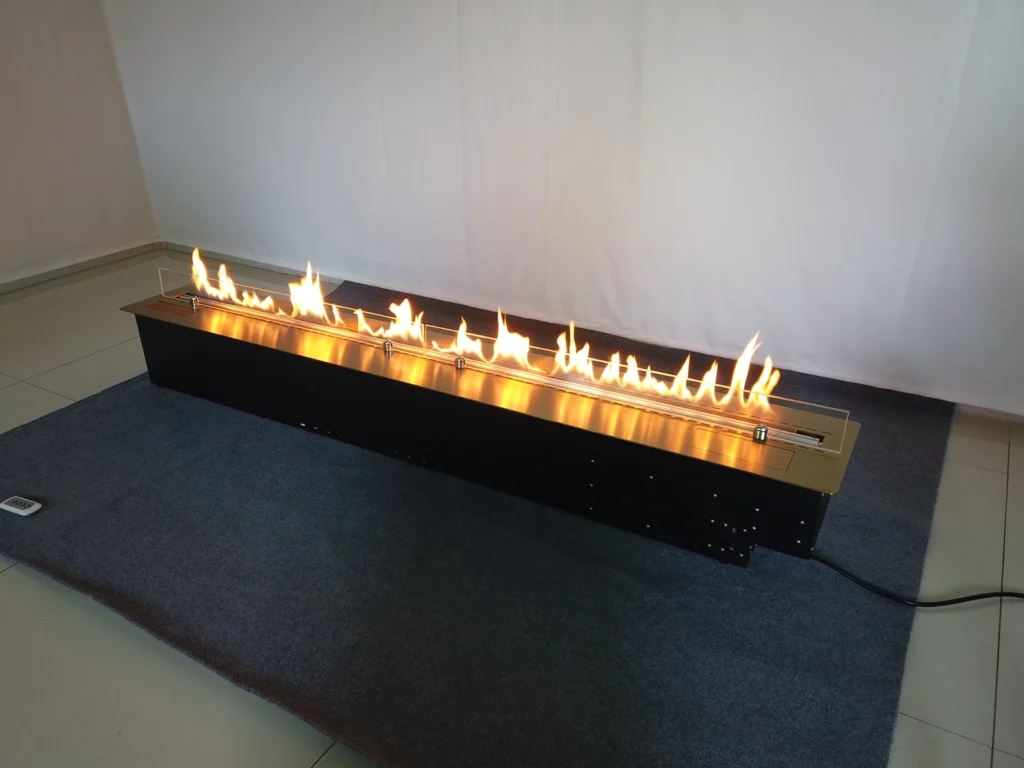
Bioethanol fires are good at one thing above all: a real flame in a room that has no chimney, no gas supply and no space for building work. They are weaker as heating, they cost more to run per unit of heat than gas or electricity, and everything they burn ends up in the room you are sitting in. Whether that trade is worth it depends on what you want the fire to do. This guide starts with the short answer, goes through the disadvantages one by one, and then compares a bioethanol fire with a log burner and an electric fire.
Are bioethanol fires any good?
For what they are designed to do, yes. A bioethanol fire burns liquid fuel with a real, moving flame. It needs no flue, so it can go in a flat, a new-build without a chimney or the middle of an open-plan room. There is no smoke, soot or ash to clean up and no chimney to sweep. Because nothing goes up a flue, almost all of the heat from the fuel stays in the room.
What they are not is a heating system. The National Energy Foundation describes them as top-up heating and puts their heat at about a third to a half of most wood-burning stoves. If you go in expecting a real flame and a few degrees of extra warmth on a cool evening, most people are happy. If you expect it to replace a radiator or a log burner, you will be disappointed.
What are the disadvantages of bioethanol fires?
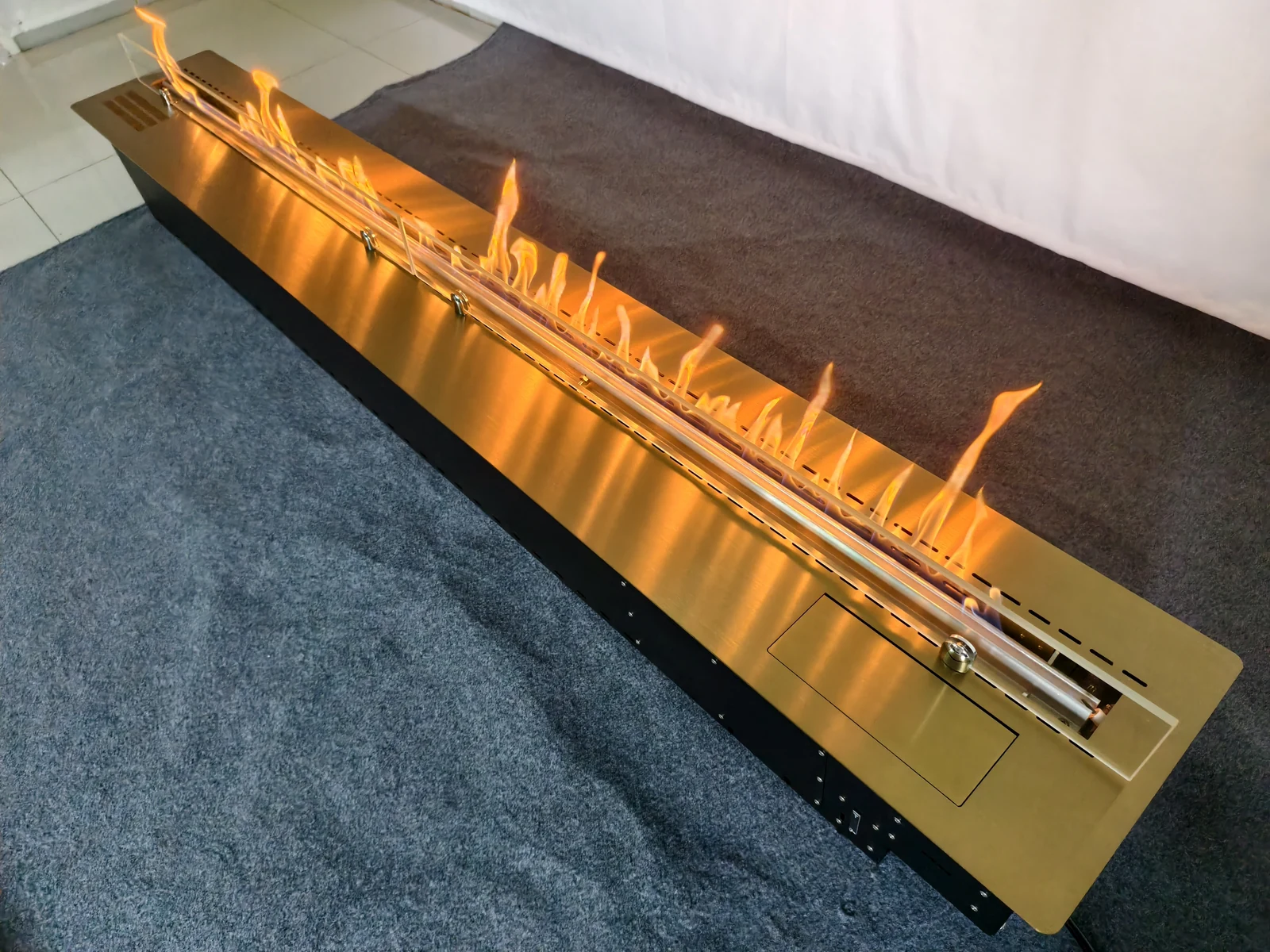
There are six worth knowing before you buy. None of them is a reason to rule one out, but each one changes how you should choose and use it.
They are not a main heat source
Most bioethanol fires give out around 2–3 kW, and some small models less. The ScandiFlames Elegant, a freestanding manual model, is rated at 1.8 kW. That is enough to take the chill off a living room, not to heat a cold house. Our guide to how much heat bioethanol fires give off explains how to check a fire’s real output from its fuel use.
The heat is expensive
The same Elegant burns 0.33 litres an hour. Twelve-litre packs of fuel cost from £32.99 to £49 at two UK suppliers we checked in November 2026, about £2.75 to £4.08 a litre, so an hour with that fire costs roughly 91p to £1.35. Per unit of heat, that works out at about 47p to 69p per kWh. Under Ofgem’s price cap for October to December 2026, electricity costs 26.32p per kWh and mains gas 7.97p. You are paying for the flame, not for cheap warmth.
Everything it burns stays in the room
A bioethanol fire has no flue, so the water vapour and carbon dioxide from the flame go into the room, and RoSPA warns that bioethanol fires also produce carbon monoxide while burning. It advises using one only in a well-ventilated room, never in a small or poorly ventilated space, and fitting a carbon monoxide alarm. The National Energy Foundation adds that the water vapour can cause condensation on cold windows and walls, which brings a risk of mould.
Independent testing has found more than that. In tests published in 2014, the Fraunhofer Institute for Wood Research measured nitrogen dioxide above the indoor guideline of 0.35 mg/m³ from every fire it tried, reaching 2.7 mg/m³ in one case, and formaldehyde above 0.1 ppm. Its researchers advised against using these fires inside flats and recommended only large, very well-ventilated spaces. Fires and standards have moved on since then, but the lesson holds: the room matters as much as the fire. Each model’s manual gives a minimum room volume; for the Elegant it is 45 m³. Our guide to whether bioethanol fires need a flue covers ventilation in detail.
Refuelling needs care
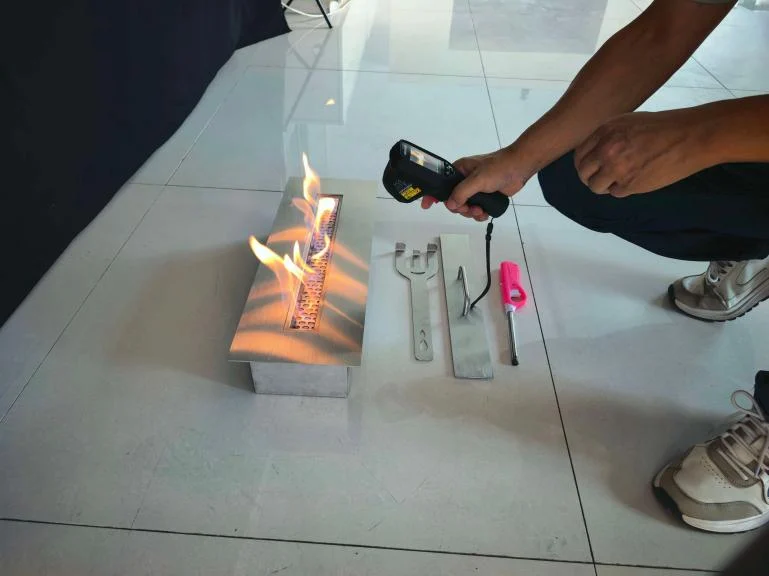
Bioethanol is highly flammable. Northamptonshire Fire and Rescue says most accidents happen when topping up fuel. The flame can be almost invisible when the fuel runs low, so it is easy to think a fire is out when it is not. Never refuel a burning or hot burner; fire services advise waiting at least 10 to 15 minutes for it to cool. Our bioethanol fire safety guide sets out the full routine.
Quality varies
Not every fire on sale is well made. In 2021 the Office for Product Safety and Standards recalled a range of bioethanol tabletop fires, sold in seven designs, because they lacked safety markings and instructions, had deformed casings that made them less stable and came with a bent extinguishing device. Look for a fire tested to the British standard: BS EN 16647-1 covers manually operated fires and BS EN 16647-2 covers automatic ones.
Some need electricity
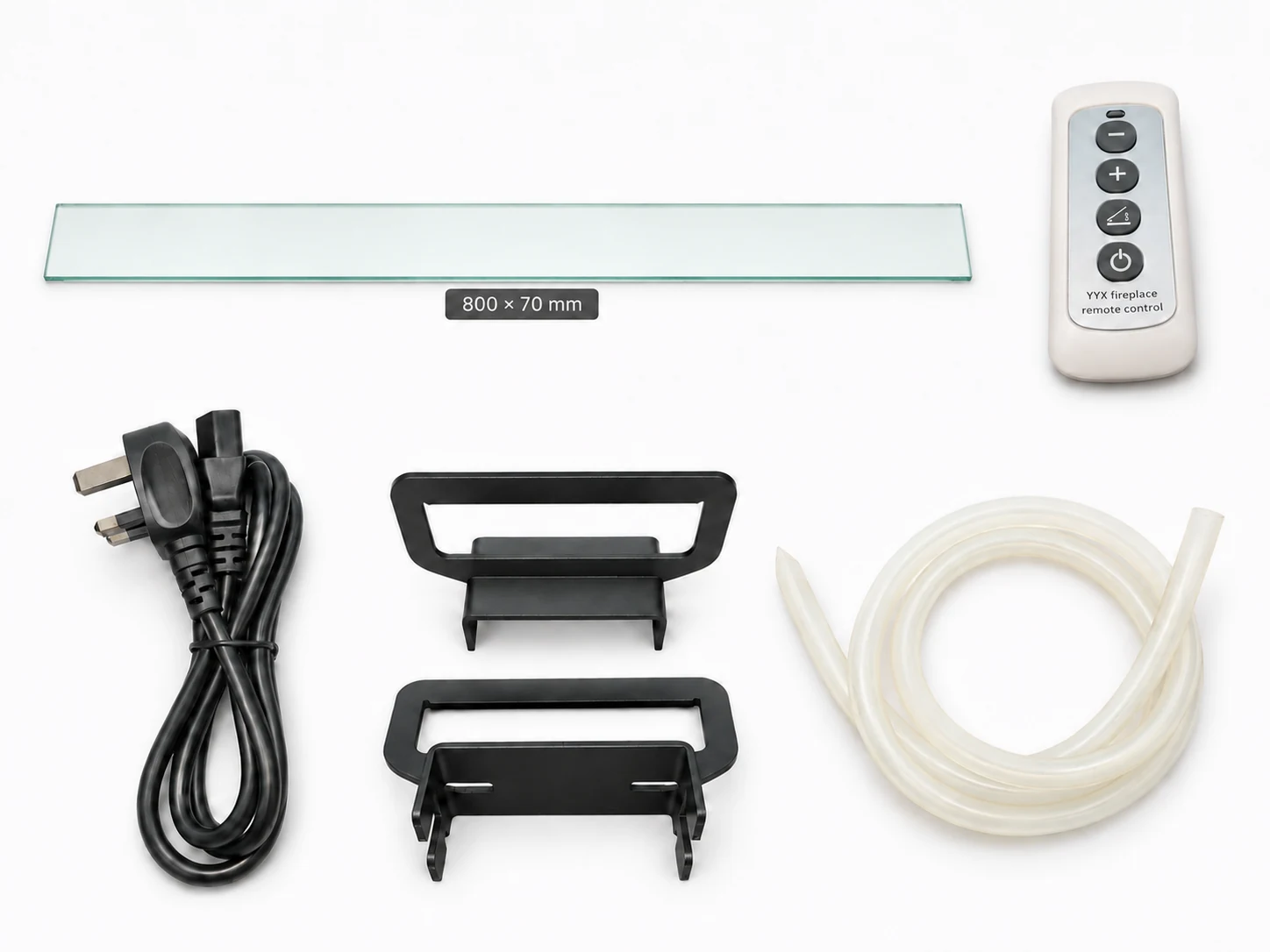
Manual burners need no power. Automatic burners with electronic ignition and a fuel pump, such as our SXRX Smart range and SXKT Smart burners, need a power supply, which affects where they can go. In exchange, they handle refuelling and lighting differently; our guide to manual and automatic burners explains the difference.
Bioethanol fire vs log burner
The two do different jobs, and the differences are bigger than the price tags suggest.
Heat
A log burner is a proper heater. The Stovax Stockton 5, a compact wood-burning stove, has a nominal output of 5 kW, against 1.8 kW for the Elegant. HETAS, the solid-fuel certification body, says modern stoves reach around 70–85% efficiency in ideal conditions. Some heat goes up the chimney, but the smoke and combustion gases go with it.
Installation
This is where bioethanol wins. A log burner needs a chimney or flue system, and many UK homeowners pay £2,500 to £4,000 to have one installed into an existing chimney; one installer puts typical installations at £1,800 to over £4,500. A freestanding bioethanol fire such as the Elegant costs £343 and needs no installation at all.
Upkeep and rules
A log burner needs its chimney swept twice a year if you burn logs, according to the London Fire Brigade, and its wood should carry the Ready to Burn logo, which means a moisture content of 20% or less. In a smoke control area in England, you can face a penalty of up to £300 if your chimney releases smoke, and a fine of up to £1,000 for buying unauthorised fuel for an appliance that is not Defra approved. A bioethanol fire has no chimney, so none of this applies.
Air quality
Both affect the air, in different ways. Burning wood indoors produced 12% of the UK’s total PM2.5 emissions in 2024, according to government statistics, and a University of Sheffield study found particle levels inside homes were three times higher while stoves were in use. A bioethanol fire makes no smoke, but its combustion gases stay in the room rather than leaving through a flue.
If you want serious heat and can install a chimney, a log burner is the better heater. If you have no chimney, live in a flat or want a fire without building work, a bioethanol fire is the realistic way to have a real flame.
Bioethanol fire vs electric fire
An electric fire is the other common choice for homes without a chimney, and it beats bioethanol on cost, convenience and air. Which? notes that electric fires are usually limited to 2 kW or less. At 26.32p per kWh, running a 2 kW heater for an hour costs about 53p, and an hour of 1.8 kW, the same heat as the Elegant, costs about 47p against 91p to £1.35 for the bioethanol fire. The flame effect alone uses LED lighting that draws about 10 to 50 watts, roughly 1p to 2p an hour, according to Direct Fireplaces. Nothing burns, so there is no refuelling and nothing to ventilate.
The difference is the flame. An electric fire’s flame is a picture, however good the effect, and the heat comes from a separate element. A bioethanol fire’s flame is real, with the movement and warmth you feel on your face. No heater is free of risk: the London Fire Brigade says electric heaters cause more than 160 fires a year and advises having older heaters tested.
If you want the cheapest, simplest warmth, choose electric. If the point is a real flame, only bioethanol, gas or solid fuel will give you one.
Bioethanol, log burner or electric fire at a glance
Scroll across the table to see all columns.
| Bioethanol fire | Log burner | Electric fire | |
|---|---|---|---|
| Real flame | Yes | Yes | No, an LED flame effect |
| Typical heat | Most around 2–3 kW; the Elegant is 1.8 kW | The Stockton 5 is 5 kW nominal | Usually 2 kW or less |
| Cost of heat | About 47–69p per kWh | Not compared in this guide | 26.32p per kWh |
| Installation | None for a freestanding model | Chimney or flue; £2,500–£4,000 into an existing chimney | Plug in |
| Combustion gases | Stay in the room | Leave through the chimney | None |
| Main upkeep | Careful refuelling and good ventilation | Sweeping twice a year and dry wood | Have older heaters tested |
Is a bioethanol fire worth it?
It is worth it if you want a real flame where a chimney or gas fire is not possible, you will use it for evenings and occasions rather than all-day heating, and the room is large enough and ventilated well enough for the model you choose. It is not worth it if you need to heat a room cheaply every day, if the room is small or poorly ventilated, or if refilling a fuel container by hand would be a nuisance.
Before you buy, check five things on the product page or in the manual:
- The standard it is tested to (BS EN 16647-1 for manual fires, BS EN 16647-2 for automatic ones).
- The heat output in kW and the fuel use in litres per hour.
- The minimum room volume, compared with your own room’s length × width × height.
- How it is refuelled and how long it must cool first.
- Whether it needs a power supply.
If you plan to put a TV or shelving above the fire, see our guide to putting a TV above one before you choose a position.
Frequently asked questions
Do bioethanol fires smell? Good-quality fuel should burn with little smell. Direct Stoves, a retailer, says you may notice a faint smell for a moment when the flame goes out. A strong or lasting smell is a sign to check the fuel and the ventilation.
Can you use a bioethanol fire in a flat? You can, if the model’s minimum room volume and ventilation requirements are met, but take the warnings seriously. Fraunhofer’s researchers advised against use inside flats and recommended only large, very well-ventilated spaces.
Are bioethanol fires cheaper to run than electric fires? No. Per kWh of heat, bioethanol at £2.75 to £4.08 a litre costs roughly 47p to 69p, against 26.32p for electricity under the October to December 2026 price cap.
Related reading: Do bioethanol fires give off heat? · Do bioethanol fires need a flue? · Are bioethanol fires safe? · Can you put a TV above a bioethanol fireplace?
Sources
- National Energy Foundation – Bioethanol fires: a good or bad idea?
- ScandiFlames Elegant bioethanol fireplace
- BioFireFuel – 12 x 1 litre bioethanol
- EkoFuel bioethanol 12 litres
- Ofgem – Energy price cap unit rates
- RoSPA – Bioethanol fires
- Fraunhofer – Ethanol fireplaces: the underestimated risk (2014)
- Northamptonshire Fire and Rescue – Bio-ethanol heaters
- Cheshire Fire and Rescue – Bio-ethanol burners
- Dorset & Wiltshire Fire and Rescue – Bioethanol fires
- OPSS – True Shopping bioethanol tabletop fire recall
- BSI – BS EN 16647-1
- BSI – BS EN 16647-2
- Stovax – Stockton 5
- HETAS – Log burner efficiency explained
- HETAS Engineer – Log burner installation cost
- Simply Stoves – Log burner installation cost 2026
- London Fire Brigade – Heaters and open fires
- Defra – Burn better
- GOV.UK – Smoke control area rules
- GOV.UK – Emissions of air pollutants: particulate matter
- University of Sheffield – Indoor wood stoves study
- Which? – Buying an electric fire or stove
- Direct Fireplaces – Running costs compared
- Direct Stoves – Are bioethanol stoves any good?